Meteora and Olympus - Journey to the Legendary Monasteries and Mountains of Greece
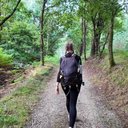
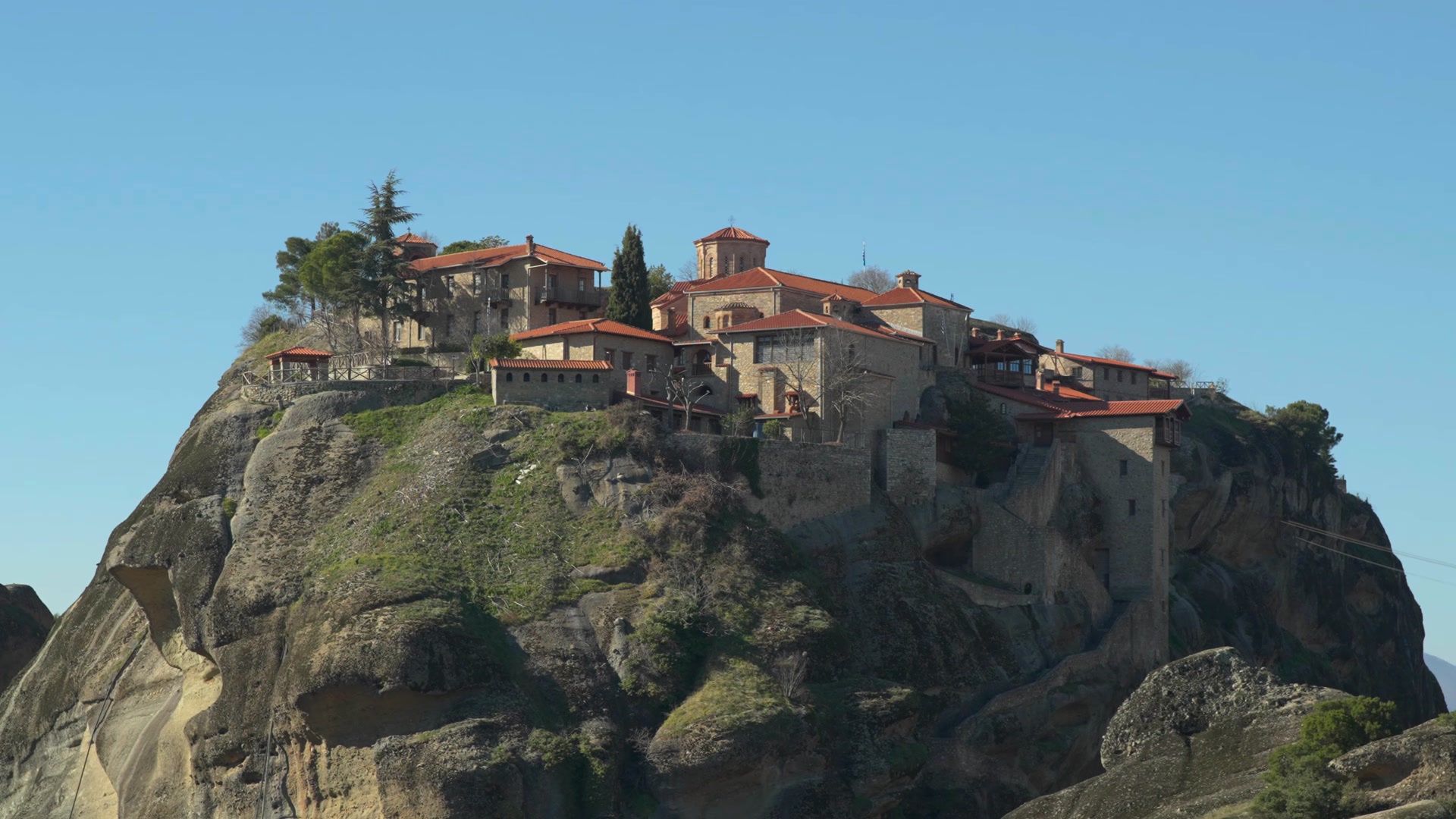
Hello friends. Our journey to one of the Seven wonders of the world began in the city of Thessaloniki. First we set out towards the town of Kalambaka. At the foot of this place lie the Meteora monasteries. The drive takes about 3 hours by car, but you can also reach Kalambaka by train or bus. Of course, the car is the most comfortable way to get there. It's ideal for reaching this celestial and incredibly beautiful region.

The majestic Meteora cliffs were formed around 25 million years ago and are actually the petrified bottom of a historic sea. These cliffs can reach heights of up to 600 meters and look like stone pillars. In Greek, Meteora literally means suspended in the air.

Our exploration begins with the smallest monastery Roussanou Monastery, also known as Saint Barbara Monastery. This monastery emerged in the mid-15th century and has been run by women since 1980, hence it took on a second name in honor of Saint Barbara. The climb here was the hardest among all the monasteries we visited. The monastery is only open until 2 pm, so if you want to visit, you should hurry.

Each monastery has an entrance fee. For this monastery, we paid around 3 euros. There used to be about 24 monasteries here, but today some are in ruins and some have completely disappeared. A total of six active monasteries remain: four male monasteries and two female monasteries. The views from here are truly fantastic. In fact, many people come to the monasteries just to see these amazing views.

Let’s talk about dress code. My style changed a bit before entering the church because I was wearing pants and it’s said that women entering the church should wear a dress instead of pants. Therefore they kindly provided me with this beautiful dress. Also during the summer months, if you arrive wearing shorts or with bare shoulders, they recommend or provide a scarf for free so you can cover your legs or shoulders.

In almost all monasteries photography and video recording are prohibited in certain areas. However, generally the interiors of the monasteries are quite similar. If you see the interior of one monastery, you can easily guess what the others will look like because essentially they feature the same style of decoration, icons, domes and churches of different monasteries.

The grandeur and inaccessibility of these places attracted monks and ascetics even before the 10th century. However, the monastic community was established in the 10th century. All materials were carried to the rocks by hand, in baskets or nets. At the same time, monks were pulled up using these nets. In 1500 as I mentioned earlier, there were 24 monasteries here.

The next site that caught our attention is one of the most famous and most visited monasteries in the complex, the Varlaam Monastery or All Saints Monastery. According to history, in 1350 a monk named Varlaam climbed the rock and built a small church dedicated to the Three Saints. This became the foundation of today’s monastery. After Varlaam’s death, this place was abandoned until around 1517.

Inside the monastery, there is a wonderful viewing platform and breathtaking space. Currently the monastery is open until 4 PM and the entrance fee is about 5 euros. As far as I remember, towards the end of the 14th century, the sovereignty of the Byzantine Empire over Northern Greece increasingly came under threat due to Ottoman raids wanting to capture the Thrace region. Monks and hermits saw the inaccessible rocky pillars of Meteora as a perfect refuge. Thus they began building monasteries here starting from the 10th century.

I wore a long skirt again and here we are at the largest, central and main monastery of the Meteora complex: Varlaam Monastery. This monastery is particularly interesting because, unlike the others, it has a wider area inside. Photography is strictly prohibited inside. However, the outdoor spaces are magnificent, enchanting and wonderful. So, we decided to take a walk here.

As I said, climbing to any monastery from its establishment until today, especially Varlaam Monastery, was quite challenging. The first hermits climbed to the monastery using steps. Later these steps were replaced by rope ladders. However, this method was still dangerous, so afterward, lifting machines were used to ascend. Loads were placed in baskets and the journey took about 25-30 minutes. In 1923, approximately 200 steps were carved into the rock. To be precise, there are 195 steps. After this, climbing to the monastery no longer required special effort, although it remained a good cardio exercise.

The entrance fee for this monastery is also about 5 euros. The price is quite reasonable and accessible for everyone. The monastery is located at an altitude of about 370 meters above sea level and from here, unique and incredible views open up: towards the plain, other monasteries, cliffs and Kalambaka. Many monasteries should be visited just for these unique views. Outside most monasteries, there are special platforms where you can capture these views.

We entered the monastery. Photography is prohibited in certain areas. However, you have some freedom at the entrance. You can see the interior decoration, icons and arrangement from here. On average, they are all decorated in quite a similar style. You can admire wonderful wood carvings and various details. However, photography is completely banned in the dome and tower areas of the church. So, we continue our walk in the open areas of the monastery.


By the way there was a 12000 liter water tank. There are coins underneath. I think drinking water was stored here in ancient times. Carrying materials, food and water from below to above was very difficult, so this storage system was likely used during that period. From here you can also clearly see the largest monastery in the complex. It has now started to appear ahead of us.


Here you can see the structure of the stair system and the crane system used to lift loads upward. The crane is now fully automatic. It moves along cables. But as you can see, this is now a kind of exhibit, as all materials are transported via a modern funicular system.


After bidding farewell to Varlaam Monastery and taking one last look back, we move on to our next monastery the Great Meteor Monastery. This monastery is also known as the Transfiguration Monastery and is the largest among all the complexes. It spans an area of 50 hectares and is located at a height of 613 meters. It was founded in 1340 by a monk named Athanasios who came from Mount Athos. Let me remind you, the Mount Athos complex is also located on Greece's third peninsula of Halkidiki.

The monastery is open until 2 PM in winter and, I believe, until 3 PM in summer. Reaching it is now possible not by nets or hanging ladders as before, but via around 150 stairs starting from the parking lot. The monastery is multi-layered and if you don't understand its geography at first, you can easily get lost. Inside the monastery, you can also find souvenirs and local wine for sale. This concept applies to all monasteries. You can buy church gifts in each.

We continue our journey marveling at the incredible views, cliffs and columns of this region. Our next monastery is what I would call the symbol of this complex—probably a place all of you have seen before. This is the most recognized monastery of the Meteora complex, the Holy Trinity Monastery. That is, alongside the previously seen Varlaam Monastery, this monastery is, to me, the postcard monastery. When you search for Meteora online, the first image you encounter is of this monastery. The Holy Trinity Monastery, an Orthodox monastery for men, is one of the six existing monasteries today. Like Varlaam Monastery, it is open until 4 PM. The ascent is rather unusual and requires physical endurance. The funicular system operates only for materials and workers, not for tourists. So, friends, prepare for a challenging hike.

There is no reliable information about the founding date of this monastery. Some sources mention the year 1438, but a record written in 1362 refers to both the Great Meteor and this monastery. What is certain is that the church was built in 1476. This date is inscribed on the façade of the church. Today, the monastery complex includes a chapel, a tower with balconies, an altar and goats. In 1560, the Holy Trinity Monastery burned down and was almost completely destroyed, but it was quickly rebuilt. And the Church of Saint John, carved into the top of the rock, was restored.

The views opening from the Holy Trinity Monastery are fantastic. In my opinion the landscapes are almost like those on Mars. You could directly film a fantasy movie here without needing any additional decorations. Especially at sunrise and sunset, the sun illuminates these cliffs beautifully. We couldn’t get enough of these magical views. However, our time in Meteora ended and we continued our journey to other places in Greece.

Our next destination was Mount Olympus, the mountain of all gods. Mount Olympus is 2917 meters high and is the tallest mountain in Greece. Surrounded by deep valleys and with a snow-capped peak, Olympus is located near the eastern coast of mainland Greece, close to the Aegean Sea. It is about an hour away from Thessaloniki. There are many options for those who want to see Olympus: routes starting from Olympus National Park up to the summit, which is nearly 3000 meters high.


We began with the Olympus National Park route. This route is suitable for people of all ages and physical conditions. Olympus National Park was established in 1938 and became the country's first national park. The highest point of Olympus, Mytikas Peak, is located at an altitude of 2917 meters above sea level. While it is the highest point in Greece, Olympus is not a mountain standing alone. Homer referred to Olympus as many-peaked in his work, the Iliad. This is a mountain range in the Balkans. Only Musala Mountain in Bulgaria surpasses Olympus.

In ancient Greek mythology, Olympus was considered the sacred dwelling place of the gods, presided over by Zeus, the leader of the gods. Therefore, the waterfalls you see in this national park are called Zeus's Bath. Additionally, on the northern slope of Olympus lies the Ancient City of Dion in Macedonia.

Today there are many tourist hiking trails in Olympus National Park. Usually, visits begin with a trip to the town of Litochoro. This small town with a population of about 7000, is located at the foot of the mountain. All tourists come here and typically want to climb or hike the mountain of the gods. The local population mostly earns their living from tourism because most people come to visit Olympus, the mountain of the gods. Thus they stay in Litochoro, go to cafes and restaurants, buy souvenirs and shop. Therefore, this place survives thanks to tourism, whether it is seasonal or year-round.

We moved on to the next hiking trail. I call this the tourism garden. Because there is a fairly civilized route within Olympus National Park. Simply put, you walk on prepared paths. However, not everyone likes such activities, so there are more challenging trails designed for people who are more prepared and in good physical condition in Olympus. We passed through exactly this kind of trail.

You can have a picnic here, bring tea or coffee in your thermos, pack some snacks and walk through this mystical forest while enjoying these magical views. It is very beautiful, the air is very fresh and it remains quite cool even on hot summer days. If you want to escape the summer heat, climbing Olympus will be a pleasant way to spend your time. You can enjoy these natural beauties, meditate a little, perhaps swim if you come during the warm season or simply walk and listen to nature. The water is really icy cold. Normally, this place gets very crowded, but right now there might be just a few degrees. Very invigorating water. Of course, it's winter now, but still, this hike is not suitable for everyone. I wouldn’t recommend such trails for preschool children, elderly people or perhaps those with broken legs or arms.
You can approach Mount Olympus from different points and this depends on the type and duration of the climb you wish to make. So, everything is in your hands.


You can check out this post and your own profile on the map. Be part of the Worldmappin Community and join our Discord Channel to get in touch with other travelers, ask questions or just be updated on our latest features.
Congratulations, your post has been added to the TravelFeed Map! 🎉🥳🌴
Did you know you have your own profile map?
And every post has their own map too!
Want to have your post on the map too?
- Go to TravelFeed Map
- Click the create pin button
- Drag the marker to where your post should be. Zoom in if needed or use the search bar (top right).
- Copy and paste the generated code in your post (any Hive frontend)
- Or login with Hive Keychain or Hivesigner and click "create post" to post to Hive directly from TravelFeed
- Congrats, your post is now on the map!
PS: You can import your previous Pinmapple posts to the TravelFeed map.Opt Out
This trip was amazing. Thank you so much for showing us around this beautiful and historical place.
The first picture is my favorite, the monastery looks peaceful on the mountain.
It was amazing, have a great day my friend.
Hello @worldmappin @travelfeed
Have you verified this account before adding it to heavy curation?
Dear @hivewatchers. As we previously told you already our community moderation is there to check if community rules are being followed. Of course, we check every post accordingly regarding content before curation. This includes using AI and recycling, but we don´t verify account identification with accounts outside of Hive. This user has been part of the community for long time now. There is no history of abuse so far. But of course if you find something that we didn´t see, please let us know.
Hi.
Ok, thanks.
I have asked this user for verification because the account had a 3-year break.
ok, I understand. Thanks for letting us know.
Hi
@worldmappin
Considering that the account went to power down now instead of replying to the verification request, I presume that it is another ID theft account like a few other similar ID thefts that have been posting Italian travels.
Hi @hivewatchers. Thanks for the update. We will note it accordingly.
Hello.
Welcome back to Hive.
To confirm your authorship of the content, could you please add the link to your Hive blog to your well-established social media account like Facebook, Instagram, or Twitter (which has not been recently created)?
After you add the link, please respond to this comment with the URL link to that website.
You can remove this mention once we confirm the authorship.
Thank you.
More Info: Introducing Identity/Content Verification Reporting & Lookup -
Hiya, @ybanezkim26 here, just swinging by to let you know that this post made it into our Top 3 in Travel Digest #2514.
Your post has been manually curated by the @worldmappin team. If you like what we're doing, please drop by to check out all the rest of today's great posts and consider supporting other authors like yourself and us so we can keep the project going!
Become part of our travel community:
Waoooo. Beautifull place. Congratulations.🙏👏👏👏
Amazing tour!!!
Locksmith training Sheffield offers hands-on experience in key cutting, lock installation, and security systems. Perfect for beginners or professionals looking to upskill, this course provides expert guidance and practical knowledge. Gain certification and unlock new career opportunities in a growing industry. Train with professionals and master the trade in Sheffield. Start your journey today and secure a successful future in locksmithing!
Posted by Waivio guest: @waivio_ali-raza
Congratulations @veramen! You received the biggest smile and some love from TravelFeed! Keep up the amazing blog. 😍 Your post was also chosen as top pick of the day and is now featured on the TravelFeed front page.
Thanks for using TravelFeed!
@for91days (TravelFeed team)
PS: Did you know that we have our own Hive frontend at TravelFeed.com? For your next travel post, log in to TravelFeed with Hive Keychain or Hivesigner and take advantage of our exclusive features for travel bloggers.
Super interesting the history of the Greek monastery, it is located on the heights, which gives a nice view of the city. The spring that is born in the final images must be very nice to have it live and enjoy the feeling of the water falling.
You know ! Here in Cuba 🇨🇺 I went to a church that inside the pictures were very similar now I leave an image for you to see.
Otherwise the post is spectacular, thanks for sharing @veramen. Greetings and great Sunday 😊😉👏
Congratulations @veramen! You have completed the following achievement on the Hive blockchain And have been rewarded with New badge(s)
Your next target is to reach 5000 upvotes.
You can view your badges on your board and compare yourself to others in the Ranking
If you no longer want to receive notifications, reply to this comment with the word
STOPCheck out our last posts: