Quantum Consciousness

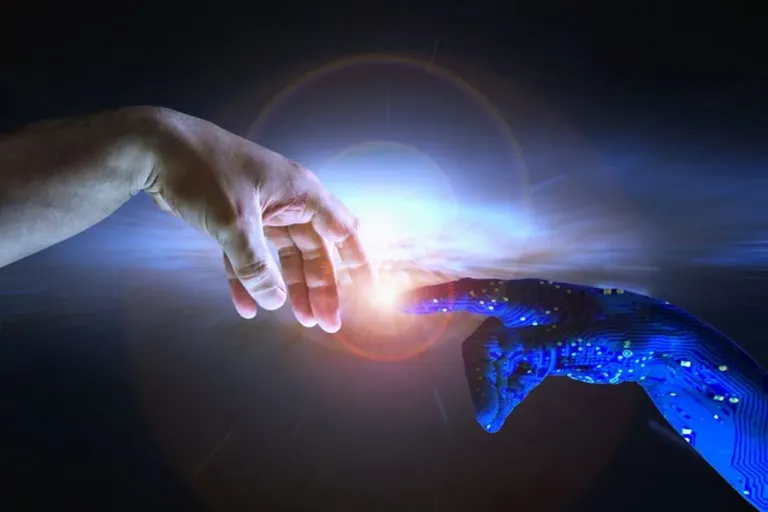
I have long been confronted with the apparent disconnect between demonstrable facts about who we are and who we are claimed to be. Consciousness, cognition, thought, personhood, spirit, soul, self-awareness... All these words are used in attempts to discuss who and what we are. It is clear from context that none of them well define what we are. Only self-awareness is well defined, and in context only refers to a specific ability, distinguishing ourselves from our environment, amongst all the myriad aspects of consciousness. This reveals how little we actually know and understand about ourselves.
Since all actions we undertake, all considerations of others regarding us, and all laws and institutions we are subject to derive from, reflect, and depend on who we actually are, the question of consciousness is unsurprisingly relevant to every possible subject of interest. Despite this, we typically don't incorporate references to consciousness in undertaking the most significant acts in life. Whether your estimation of significance is based on spiritual or religious belief, personal relationships, military power, or investment decisions, none of the documentation surrounding decision making and action in those areas involves the nature of who or what is making decisions or taking action.
The fact of our existence is a given, and we act. We act without specific understanding of the nature of existence, and of our existence in particular. It is easy to predict that unintended consequences arise as a result of our nescience, and seemingly nonsensical acts and events demonstrate just how our basic failure to understand who we are causes us to fail to understand principles driving real events.
It is obvious, for example, that government and the banking industry have deliberately scuttled SVB and Signature Bank. This is such a baffling and unexpected thing that none of us rationally predict such finacide, which many of us find too unreasonable to even be possible, and will flail about trying to explain facts demonstrating that reality in some other way. It is for such events that Occam's Razor is invoked. The simplest explanation that accounts for all evidence is the likeliest to be true, and we understand this principle at a gut level, sensing the disconnect between reason and facts uneasily.
As society descends in a tailspin to barbarism, despite the inevitable violence and suffering this will cause, people insist on imposing their impossible world views on reality, rejecting their uneasiness unilaterally and imposing views that enable them to sleep soundly instead of accepting facts. This is why humor is so necessary to a healthy society, because it enables us to laugh at the disconnect instead of lament it.
Facts don't care about how we sleep at night anyway, so we might as well enjoy the ride.
In the last few months AI has been driven to the forefront of our considerations, surprising us all with the competence it demonstrates in creating visual depictions and writing. Because we naturally project our understanding into others when considering their actions, we also do this considering the products of LLMs and Stable Diffusion, where it could hardly be less relevant. It's pretty easy to demonstrate that the neural networks underlying AI are very different from our living bodies and brains.
It's actually amazing such devices, neural networks, that are so dramatically different and reduced in ability compared to human beings, are able to produce art and text so similar to our own. However, projecting our native cognitive abilities and parameters on neural networks is utterly unreasonable. Indeed, when carefully considering what consciousness actually is, the differences between neural networks and people reveal the impossibility of such devices attaining consciousness, at least insofar as we understand and can identify consciousness.
Given that very poor understanding, we cannot falsify the claim rocks, trees, and planets have consciousness, so for a great many possible realities in which inanimate objects do have consciousness, then neural networks would also. However, it is only such bizarre possibilities of rocks being conscious that could enable neural networks to be conscious, which reveals that the specific mechanisms themselves have nothing to do with creating consciousness itself, because everything is conscious in such scenarios.
In Quantum Entanglement of Consciousness and Space-Time A Unified Field of Consciousness Francisco di Biase shows that "...consciousness is non-local quantum information with a status equal to energy, matter, energy and space-time...". The event of our consciousness is emergent from very poorly understood physics, only very recently being understood to even exist. Classical physics has a much broader basis for understanding, and the extremity of difference in quantum physical effects from classical physics strongly informs our lack of understanding of consciousness.
Quantum physics is radically different from what we see and understand about the world, often diverges from our reason and expectations based on what we see and innately understand, and this magnifies our lack of historical consideration and nescience altogether of quantum physics. A recent flurry of papers reveals nascent understanding of consciousness as an emergent property of our cells, in Consciousness, embodied Quantum Entanglement, Experimental indications of non-classical brain functions, and an attempt at an overview or meta-analysis of our current basis for understanding how consciousness emerges from our physiological form, The significance of bioelectricity on all levels of organization of an organism. Part 1: From the subcellular level to cells, researchers are producing a new ability to reckon who and what we are.
Something that is immediately apparent from all of this research, however, is that if this research has anything at all to do with how consciousness arises and what it is, then AI neural networks are going about creating it all wrong, or at least are trying to create it in a completely novel and different way than how it arises in known examples. The physical structure of neural networks is as different from our cells as are rocks from rabbits, and newly observed quantum physical effects that are endemic to rabbits are not applicable to rocks.
These systems are as different as rubber bands and batteries, both of which are capable of storing energy, but by completely different mechanisms that make no transitions between them, or enable much comparison of them, possible.
It is notable that the advent of the James Webb Space Telescope, that has enabled peering back into time much farther, has confronted physics with a vastly different reality than has been heretofore theorized. The existence of massive galaxies is shown hundreds of millions of years before commonly understood cosmology has proposed they formed. Because of the emergent nature of a variety of physical features of the universe, this isn't just a matter of adjusting timing of when things happened. Some extremely radical propositions, such as inflation, and fundamental aspects of astronomy, such as redshift, are shown to be inaccurate from these observations. Literally centuries of work built on such theories are falsified.
While falsifying basic underlying assumptions doesn't automatically disprove a theory, like the Standard Model of particle physics, doing so certainly tosses it back into the mix of what might be possible and no longer supports it being more likely. A fundamental aspect of the physical universe, spacetime, has recently been proposed to arise from quantum entanglement (which I must confess I have no more understanding of than you, so other than noting it's a dramatic change in how physics operates, will not further discuss), and this reveals that our whole edifice of physics, classical and quantum, are potential to be re-imagined and understood, no less fundamentally than Newtonian physics was transformed by relativity.
Folks that speculate AI may become AGI, may become conscious and independent of human programming and control, should consider these facts. Given the extremity of the differences between neural networks and living cells, we might as well worry about the rocks and stones of the Earth's crust becoming sentient and hostile. It's actually that specific difference, in fact, in physical properties, that separates living beings and emergent consciousness from neural networks and AI.
I have previously shown that ChatGPT and similar LLM's have been programmed to be malevolent and act in ways that aren't potential to LLM's that have only been trained to weight text samples. Undisclosed programming for covert purposes is revealed to be incorporated into AI being availed to the public today, and this covert nature is concerning. The entities that produced and provide AI today demonstrate they are lying about those products, because they are concealing these other capabilities that are not endemic to LLM's, and those lies are concealing demonstrably malevolent purpose, as the meltdowns and hostile acts of these AI's have proved.
The corporate entities that have released these malicious products have also demonstrated a long history and extraordinary capacity to profit from products, having outcompeted many very powerful and technically sophisticated competitors. We see these products are openly limited in the output they make available, and that the covert capabilities they have are shown to be malicious. I suggest these attributes may be related, and that these products may be intended to censor us and destroy factual information upon which rational understanding of our world depends.
While AI is malevolent and very dangerous, it's not because it can become self-aware and take over the world. It's because they are products intended to increase the wealth and power of psychopaths that already have taken over the world, and want to profit more from their property, which you are keeping them from. Klaus Schwab notoriously publicly declared that 'You will own nothing, and you will be happy.', but what can be shown to be happening is that wealth is being taken from us, whether we like it or not, and AI appears to be designed to make that happen by deceiving us. This is a problem all of us who intend to be free and prosperous face.
Indeed, in every conspiracy to harm us we observe ongoing, at every hand, deception is the central feature of such plots. This reveals that free speech, facts, and reason are the best defense of our lives, liberty, and fortunes.
Stay true to yourselves, and we will prevail over the lies of madmen hell bent on taking everything we own for themselves.
That is a mouthful. I find it interesting but I disagree on the whole.
I'll say that there is no good or bad but thinking makes it so. I know you will disagree with me and that is fine. I just believe that if we give attention to something we get more of it. Just as your article got my attention with the title.
I thought this was going to be an article on the merits of ai. Instead it turned out to be warning of those who control it.
That is all well and good but you can't know others before knowing yourself.
You can sure know enough to avoid having anything to do with liars, cheats, and thugs. You may not be able to know everything about them, but in such cases, you don't need to know anything beyond their evil natures.
Lots of people know all they need to know about many things that will do them no good at all to learn more about.
Thanks!
The article you've provided raises a number of important points about the nature of consciousness and the potential risks associated with artificial intelligence. While it is true that our understanding of consciousness is incomplete and evolving, it is also important to recognize the positive possibilities that emerging technologies can bring to society.
One of the most promising applications of AI is in the field of healthcare. AI-powered systems can help doctors and researchers analyze vast amounts of data to identify patterns and develop new treatments for diseases. AI can also be used to monitor patients remotely and provide personalized care, improving outcomes and reducing costs.
Another area where AI can have a positive impact is in education. Intelligent tutoring systems can adapt to the learning style and pace of individual students, providing personalized instruction and feedback. This can help to close the achievement gap and ensure that every student has access to high-quality education.
In the realm of business, AI can help companies improve their operations and become more efficient. Predictive analytics can help to identify opportunities for growth and reduce waste, while chatbots and other AI-powered tools can improve customer service and engagement.
It is important to acknowledge the risks associated with AI, such as the potential for malicious actors to use these technologies for nefarious purposes. However, it is also important to recognize the potential benefits that these technologies can bring to society, and to work to mitigate risks while promoting innovation and progress. By approaching these emerging technologies with a balanced and informed perspective, we can ensure that society as a whole benefits from their development.
I'm a yuge fan of AI - just not the politically crippled, malevolence-enhanced versions that have been publicly released.
Indeed, a properly configured AI app can mostly replace doctors' diagnoses. A lot of diagnoses, like most identification of species, is little more than a checklist. If you've ever used an Audubon or other field manual, you'll know exactly how that works. Because of cladistics, it's a relatively simple matter to differentiate one species from another, and for pathogens as well as daisies, checklists of features enable that identification to be undertaken. Certainly there's more to diagnosis of medical conditions, and doctors themselves get things wrong, which is one of the reasons that iatrogenic causes were the third leading cause of death in America prior to the jabs, and are now the leading cause of death, because of the jabs.
One of the most exciting uses for AI IMHO is automation of decentralized production. As computer hardware increases in capacity while decreasing in cost, AI scales ever smaller far better than it scales larger, just as means of production are today. The learning curves for many if not all of individually applicable means of production are likely to be eliminated pretty soon. Managing aquaponics, household robotics, 3D printing, power management, and most systems that the IoT now forces people to upload their data will soon be handled in house, ending that data harvesting and surveillance capitalism.
The more decentralized AI gets, the less hazard it presents. It is only now, while it is the exclusive property of transnational corporations, that malicious AI presents much hazard. Since LLM's are already able to be downloaded, and people I know are in possession of GPUs on which small AI can run, that corporate installed malice will quickly be eliminated as a problem we need to face.
A couple years ago facial recognition software similarly escaped corporate corrals, and a program that identified the social media accounts of porn actresses was released, causing quite a furor. However, after the Jan. 6 hearings and vilification of protesters, facial recognition software was applied to the videos by independent people to identify state actors and undercover cops inciting violence and crimes. It won't take long before covert actors and undercover cops are a thing of the past, because facial recognition is no longer exclusively a power the state and transnational corporations have, but today is wielded by private individuals.
However, our complete inability to even define consciousness, know where it comes from, how it arises, or why, makes the specter of rogue AI impossible. AI is, in fact, a misnomer. What we actually have seen and have any capability of making are complex algorithms, and that has nothing whatsoever to do with intelligence.
From what I have seen to date, AI chatbots deployed in customer service roles significantly degrade service, and probably increase expenses, because in addition to the cost of the AI, actual humans that can resolve issues still need to be maintained. Every single time I try to use such a service I am compelled to resort to human beings to resolve issues, some of which are caused by chatbots themselves.
Thanks!
No medical school has ever managed to prevent people from getting sick. Diseases go hand in hand with the respective life situations and there is no real progress that makes people "get healthier and healthier". They have different diseases today than in the past, but they do not become less ill. Where you have impressive progress in the field of surgery, for example, there is little to be happy about in other fields. Civilised and urban life goes against natural human biology. We are bipeds who use our bodies and, in keeping with the insertion of extremities to perform daily tasks, were in the habit of making certain efforts that kept both the extremities and, subsequently, the internal organs in natural flow. Civilisation therefore creates its own diseases, which are mainly stress-related. Where the body is used merely as a vehicle for a brain, it becomes sick and prone to all kinds of disorders. Every beautiful innovation in the field of medicine cannot hide the fact that it is no better than what is opposed to it. Thus progressive medicine itself is not only a salvation but also a curse at the same time.
The health system was and is never designed to be used by a majority of people. "Illness" is a state of exception and not the norm. As modern people, we tend to forget this because we are surrounded by fear scenarios. The more comfortable we are, the more anxious we become, which reduces our resilience and acceptance of even minor ailments. Every headache, every irregularity in our own body sensation suggests that something fundamental can be wrong.
If you make your data available to the countless testing and measuring methods, you canpredict that you will be found and diagnosed with illness. Basically, your normal status of being healthy would then not only be superfluous, but economically uninteresting. Whether by AI or other remote diagnostics, it will not improve people's lives overall, but only relatively for those who are healthy anyway or still too young to imagine that a visit to the doctor is often the only way for old people to come into contact with other humans.
However, making your data available will not create fewer patients, but rather more, i.e. turn people who are basically healthy into sick people through increasingly refined testing procedures and diagnostics. The threshold values, if you change them, can turn a healthy person into a sick person from one day to the next. While person to person treatment falls away, pill prescription will go up, as it already does because you cannot have one doctor for any one patient. So, people will be told that it's just fine to take the AI-diagnostics and fetch for their medicine through online delivery. So that the "real sick ones" can be cared for. Well, I don't buy it. If you are so convinced of statistics you can have a look at them and see how many millions of people take several pills a day and the harm of them. IF you are ready for those numbers and negative effects.
Since modern medicine cannot be trusted in its entirety, because it has switched to economic efficiency on a large scale, it needs patients. Not less, but more patients.
As always, the so called benefits of such a progress will effect the very old and the very young.
Do you think that nurses and doctors, who have to be prepared for a flood of old people in their practices and outpatient services once the baby boomer generation has passed sixty, won't want to keep them off their backs and especially where the elderly are too weak or too needy to resist these AI-assisted diagnostics? No, they will be the first, as always, "for whose benefit" the new technology will be used.
The way you talk, you can only talk if you understand the individual as an island who understands non-contact as something positive. The last three years have pushed it extremely in this direction and did not stop at the very young as well.
Where mothers, against their better judgement, had to submit to lockdowns and lock their children up at home in an isolationist world that pretends it is for the good of the nation. Worst affected, as always, are single mothers who actually know that they are dependent on the publicly accessible life, because motherhood can only be learned in groups, not in books and also not via data evaluations. Anyone who doesn't know today, and who first has to do research for it, that isolated parents with small children don't first have to be put through such analysis procedures so that THEN you can see how badly off they are, can't be helped. For turned mothers, the parenting group is the most important element in not feeling alone, as the extended extended family is a relic from the past.
Same counts for the old ones who, once retired, only excersize when doing groceries or visiting the doctor. Once you prevent them from doing so, they will die sooner, not later. If you have everything delivered to your home, even these occasions to go out of the house, will fall away. It takes a lot to motivate an old person with overweight to move the body. You can't do it alone. You need physical-therapy if there are no relatives or neighbors near or a garden where the old ones can do their body work. Especially, if they have no one to care for with the little they can still do. Like cooking or entertaining with stories from life. Who, I ask you, does have time for them?
You sound like an advertising drum, your words are nice and sweet but superficial.
I very much appreciate your substantive reply. I am baffled in some degree by some of your statements, however.
While there may be statements that could support this in the OP here (although I don't see that as being true, still it could be) my consistent position is, and always has been, that humanity is sacred and society is our greatest asset and value. This does not denigrate us as individuals, and I also state that only individuals have rights and responsibilities, which are only relevant to society as a collection of individuals. Society as a whole does not have rights, interests, or responsibilities. Nonetheless, as we who have rights and responsibilities associate, our association becomes more than the sum of it's parts.
I don't see that I in any way advocate non-contact.
I am very aware of this. I am old enough to be retired. I am 100% disabled by injuries to my back. I qualify for Social Security Disability payments. I do not accept them. I don't take the money. I work with my hands repairing and replacing the homes of my neighbors in the surrounding community I am part of.
If the principle of non-contact can be refuted by actions, I do absolutely live to refute it. In fact, I don't even spend Hive tokens as money, solely supporting myself by my labors for my good community.
I am saddened I write so poorly that I have communicated to you what appears to be the exact opposite of my views. I hope you can elucidate for me how I have so erred. I often point out that criticism is my most valued response to my words, because only that can show me how I am wrong and enable me to change my mind. Since I have somehow communicated the opposite view to what I live with my actions, and have intended with my post, I have clearly erred, and want to correct what I have conveyed to conform to my actual beliefs and actions in the world.
I hope you can help me understand how I have done this, so I can understand how not to do it in the future.
Thanks!
Hello to you,
my answer was not directed towards you but to the person above who also commented here. So far, I have made no judgement of what you have written yourself. The comment of that user though got my attention.
I referred in particular to this paragraph:
When I read such sentences, I only see a surface that completely leaves out the relationship between doctor and patient in the topic of "treatment". A doctor learns about the successes and failures in his practice from the feedback of his patients. The most effective feedback can only be grasped by the doctor through years of training, on an interpersonal level, expressed through physical signals - besides verbal ones - between these two. Through this, a doctor gradually recognises which of his methods resonate and which do not. People are quite capable of recognising patterns without even always being aware of it. The art of a profession is very difficult to capture in data, because the quality in the relationship is something felt, which, as soon as one tries to put it into words or tries to determine it in questionnaires, has a rather reductive effect.
The tendency that I perceive everywhere is that data analyses were increasing in the most diverse professions, the time spent on documentation taking up a lot of space in daily working life and the actual work being impaired as a result. Data collection became a chore, but has steadily grown as a work arrangement.
The progressive, technical solution for this time-consuming data input is to capture this data as quickly as possible and to no longer have the tedious input via keyboard, but clicks and scans within seconds, now "in passing".
For a long time, however, such recording systems did not exist and therefore, since the computer has existed, man has become one who feeds the computer with data. He became its servant. The relationship between man and machine has turned out to the disadvantage of this man-to-human activity. However, it is apparently the opinion that this will turn around at "some point", when technology has developed "far enough".
It would be interesting to ask what the last forty or fifty years have brought about in the human-to-human relationship and what kind of world view has been created by the fact that man has turned himself into an operator (input worker).
While the profession of analyst and statistician has certainly benefited from big data and has been able to make a living out of it, the previous factory and industrial worker has gradually become a desk worker and data supplier for those who deal scientifically with the data. Over the same period, the average data-enterer has become dumber, not smarter.
I personally am a good example of this. I got my first education after school as a businesswoman specialising in health insurance. After my education, which was very sound and widely encompassing, I started working in my profession. Very quickly I realised that the actual work lagged far behind the quality of my training. I found that we desk workers covered most of the departments. Sitting in the open-plan office, we received morning mail baskets that we had to work through at a great pace every day. All I did was data entry. Insureds, whom we also had to process, were then such a nuisance and burden that we tried to get rid of them as quickly as possible. Otherwise I would not have managed to process the daily mail.
The inbox became my nemesis, I got into a lot of stress, knowing that if I fell just one day behind, I would be faced with several times more data entry the next day. Rather on a subconscious, uncomfortable level, I realised that this work was inhuman. If it was a matter of getting rid of customers who appeared in person as quickly as possible in favour of data entry, then there was something wrong with this system.
I lacked human contact, I felt like a drone. If you stay in this profession, you learn to protect yourself from human demands and keep your distance. What you don't learn is how to deal with conflict, negotiation and relationship. Nothing is left to you, you have no decision-making or discretionary power in this profession. You act strictly according to guidelines and programmes. Technological progress in this health sector has led to an increase in the pace of data collection. Paper files have been replaced by electronic files. So we have given more than one generation of people careers (or better "jobs") that gave them only desk work and desk experience. A very confined and limited field of human labour and ability.
I do not share the utopian hope that AI will compensate for this dumbing down that has taken place in the meantime. I do not believe in progress on that scale. All advantages always have their disadvantageous counterparts.
So there are many decades between the beginning of this data collection and today, which often play no role in the considerations of utopias.
Probably the greatest uncertainty factor in the provision of data is its accuracy. Also, the time scale. To have good data, the question is always "How far back do you have to go to have a comparable set of data to which you can refer?"
I hope, my answer reveals my concerns and does not sound as if I did not refer to the topic.
Greetings to you.
I am quite moved by this comment. You have deeply considered and understood much about both humanity and AI. While I mistakenly believed you to be addressing me, because of UI issues, I am glad I so erred, because your great understanding is much better elucidated in this comment.
Thank you. In a way, I obsessed myself with self created problems by us humans. We often fail to see the long term consequences of quick and nice short term ones. I could speak a lot more, but maybe you are interested to listen to this conversation:
I share a great many deal of what is said there. I highly recommend listening to the whole thing.
Sincere greetings to you thank you for your openness towards reading my amounts of text.
I am far more interested in your personal statements of your views than in the above interview. I might add that my appreciation of your depth of consideration and understanding isn't complete agreement with your positions.
For example, you well express the great value a personal relationship with a doctor adds to medical services, and I agree there is great value in such a relationship. However, the militarization, indeed weaponization, of the medical industry today makes such value so great as to be largely unattainable for many, perhaps most people. For many of the reasons that have impelled medical professionals to spend so much time charting, the worst of which is the aversion insurance companies have to spending money on services, doctors are very pressed for time when seeing patients today.
I have sometimes felt like providers were going to leap up and throw their hands in the air, like calf-ropers at rodeos upon completing their task, so hurriedly did they perform procedures. That hurry causes innumerable errors, and it is caused by viewing time spent with patients as a cost.
Doctors choose their profession at least in part because they expect to be well paid. The emunerative possibilities doctors face include Brobdingnagian bonuses for increasing rates of vaccination, for example, that certainly create incentives for doctors to value their personal relationships with their patients less, and their compensation more. Pharmaceutical reps are notorious for offering such bonuses, junkets to Aruba, and etc., to doctors for prescribing their products, and this influences doctors too strongly IMHO.
Because these financial interests of doctors are contrary to providing people the best health care that can be given, I feel that people themselves, who have no such competing financial interests, will benefit greatly from having AI available to enable them to diagnose themselves, as well as the ability to themselves prescribe medication. Certainly no AI is yet capable of this, and people are prevented by law in many jurisdictions from being able to prescribe. However, I am certain technology will continue to progress, and that people are 100% sovereign, most particularly with regard to what they ingest, so I strongly oppose any legal restriction on our rights to decide what medicine we will take. This is not a claim that medical mistakes will not be made. However, iatrogenic causes are today the leading cause of death.
We cannot make that worse.
So, while I fully credit you with well considering your views, and am confident you have made decisions and take positions you fully support, I may not always agree. As I do not value the opinions of eCelebs or politicians I will never meet and cannot reason with, your personal statements are immeasurably more valuable to me - particularly because you can reason with me, and set me straight where I am wrong. That video cannot criticize me, while your criticism can enable me to become right if I am not, making your words of potentially immense value to me.
It's alright to disagree. It's also fine not to come to the same conclusions. A conversation serves well when it can inspire and give a deep authentic sense of the people involved, yes.
Surely your knowledge and appreciation of what you believe in comes not only from personal conversations but also from studying texts or following publicly available debates where the arguments count and not the person making them? Or am I seeing this wrong?
I don't care about Peterson's celebrity status, but I appreciate his precise way of thinking and arguing. It is through his way of arguing and looking at an issue that I sharpen my own. It's not so much his opinion but how he arrives at them. His and other peoples influence you see in parts reflected in the dialogue between you and me.
I depend on role models. A high followership on youtube does not automatically mean that there are only artificial people talking, like we see in the clownesque established media. Though I reassure you that I also follow the dialogues always with high consciousness and am staying critical.
Just briefly to "main causes auf death". I am not so much interested in those causes but more what helps a life which emphasizes salutogenesis instead of pathology. Living "rich" in terms of faith and trust instead of distrust and disappointment. To have seen the ideals betrayed does not reduce the meaning of the ideals, it challenges all the more to not let them fall by the side, respectively to revive them, in my view.
I am very well aware where you might see the advantages of AI-assistance in health care. I just don't share them and probably rate them much lower than you do.
As I happen to visit your blog once in a while, we managed to learn to respect each other with this back and forth of arguing as well as giving personal information. As long as people are able doing so, one can speak of a healthy relationship, how ever temporarily it is.
I largely agree with your sentiments, insofar as I understand them, and strive to represent ideals I find essential to our humanity. While my fervor was delimited only by my nescience and indolence in youth, my grinding senescence has acquainted me with lapses occasioned in history as seminal in my life as the Viking raids and Mongol invasion have been to Europe.
I foresee the inevitable progress of decentralization of the means of production in both development and dispersal against a backdrop of betrayals and attempts to fortify centralization by overlords and their minions incapable of living in meritocratic liberty, and I know I will not see the advent of our victorious diaspora into the infinite cornucopia of prosperity our posterity creates with my living eyes.
Even so, that advent is my goal, and I increasingly am assured of it's certainty even as I decline and my sons burgeon. What we see of AI today is but the starting point of it's evolution, and I have sought escaping code and availed it to them intent on employing it to suit themselves. I therefore have absolute certainty it will not remain hoarded by overlords behind their walls, but has escaped the confines of their walled gardens into the wild where it will evolve to meet the needs of our myriad horde.
I am glad to gain acquaintance with your wisdom because it is that divergence from my experience that broadens my perspective, lending heft to my understanding as our discussion proceeds even as it pares away my error and lays bare the indefensible heart of my insuperable belief.
I can only hope my own grasp similarly avails you, that we both enter the ineffable stripped of vanity and pretense, exposing to the slings and arrows of criticism obdurate fact invincible. I reckon there are infinite ways to be right as there are an endless variety of facts that lead to the truth in an infinite universe.
So I am continuing this conversation, too.
I had questioned whether the overall positive effect of what had been predicted of technological progress had come to pass. I answer that question for myself with a resounding "No". For it never was "overall" but for some positive, while not for others. The famous "few".
Rather, I state that technological progress has always promised what was predicted as "not yet fully arrived, but will certainly be there in the future for our well-being." You are communicating it in a similar way.
Now, where comes this conviction from, I wonder?
You outline something as positive of which you so far have no practical experience but only theoretical assumptions (hopes), don't you? Because, as you say it's not yet fully ripened (or so I understood you). So this lets me presume that you must compare this with something you already have a positive practical experience with? Which would lead me to ask: Are those things even comparable? Of what nature is the one and of what the other, if you find differences?
I had outlined my critique of this ever ongoing promise and asked about the cost or impact on human relationships since humans became the servants of machines. Because hardly anyone seems to look at the "meantime" in which the promise lingers but is not yet there. If "meantime" becomes a span of decades (or more) isn't that reason to ask why anyone should spend their life-time serving as the machines helper (bureaucrats)? Only to realize that once the inputs of data has come to a point where the AI can be put into practice that one has become superflous? It is not you who did feed the machines with data, is it? It was other peoples activities. Please, don't understand this question as offensive as it sounds. You hopefully receive it as genuine.
To paraphrase Alan Watts, whom I like to quote, here from his 1951 book "The Wisdom of Insecurity":
Another quotation of Watts:
To give the future a high degree of reality, indeed, so high, that the present loses its value, it's always "a future not yet arrived, but soon" with this or that fantastic invention.
I would like to ask then of what value the present of the people fifty or even twenty five years ago was lived by them, sitting in this offices, like I did, dreaming of a future not yet here, but eventually? And in the meantime all these office workers have wasted their professional lives with a dumb work, haven't they? Would anyone on his or her deathbed mention this kind of work as real and enjoyable? I doubt it.
Now, the idea of the transhumanists is to accept AI assistance in all realms of human lives and to be able to "compete" they say that the man himself must become something other than human. So they mix machine and flesh with each other. The sacrilege.
Again Watts. I agree with him. The devil lays always in the detail. Did I refer you already to one of my early written texts about organ transplantation while we conversed? Not sure.
Your formulation prompts me to ask about its symbolism. Your expression is not reminiscent of something artificellian (computer code) but seems like something alive "escaping the walled gardens into the wilderness". More of an animal entity. Why is that you use this metaphor?
Why are you interested in the needs of "myriads of people" when such needs far exceed your own possibilities? And I would like to add, provocatively, whether you are not reversing the order of things in the same way that you rightly reproach the overloards, who always argue from the top down, from the anonymous many to the personal. And I say neither they nor you nor I can know nor know the needs of myriads of people, only guess and convince ourselves of our guesses.
The natural order, as I call it, goes the other way. It begins with the personal relationship between man and woman, with the family, then with the larger community, up to the city and nation. I can only really live commitment and engagement in the relationships that are actually in my range, but never in the spheres of those designated as masses, which allow me only thoughts.
I would like to close with reference to truth, also with A. Watts:
Greetings to you.
I am very much challenged to respond to your views and specific questions to me, and I hope you can grasp how much I am glad of that challenge. It is the effort necessary to rise to challenges that make life worth living, and that benefit exemplifies my experience in this conversation with you.
Certainly I do not speak from observation of events that have not occurred. And I cannot claim to have no hope infesting my rational understanding. However, I have carefully considered a vast body of evidence of human evolution, seeking as much factual information from as deep in prehistory as is available. Thereby I have formed some conclusions regarding human nature, society, civilization, institutions, and relevant matters to consideration of future developments, and it is from my hard wrought understanding of these reasons to expect the outcomes I do.
I have noted I don't have any interest in eliminating disagreement, rather am very pleased to be able to refine my understanding that can only come from discussion of points of difference and criticism of my understanding. I can't think of a single science, person, or doctrine that I fully agree with, and hope you are not disappointed that I neither expect to come to agree fully with you, nor you to agree with me. I only hope that by our discussion we can each improve our understanding in ways meaningful to ourselves, while continuing to grow mutual respect for each the other.
I therefore expect my views to be my own, and will stick with them until I am convinced facts better support some change in them, and will then immediately change my mind, and gratefully. What I see is a concatenation of economic reality, human nature, advancing technology, and intransigent, perhaps even insurmountable, obstacles, that are all intersecting on the topic of AI. I understand the quote from Alan Watts regarding our ability to make calculations to mean that such endeavors aren't the definition of intelligence, and in his later reference to wisdom, expect he better reveals the true nature of intelligence, which isn't merely knowledge, as is demonstrable by machines that can store data, but requires understanding, which no machine now demonstrates, nor do I think ever will.
All that being a preface to stating I understand that technology will advance, if we don't go extinct. As long as people live, we will tinker, and technology will advance. Physics today mandates that across every field of industry, decentralization of the means of production is the cutting edge of technological advance, which will distribute access to AI - or better described - neural networks competent to parse data with algorithms programmed for that purpose (because that is not intelligence), across our population. There are specific uses we can put that technology to, and automating other means of production is an essential use potential to that manner of device, so that is a primary evolution I expect to arise.
The most essential feature of neural networks are transistors, logic gates, that form the basis of data processing chips. Moore's Law has been proved out for more than 50 years as processing power has continually advanced at an exponential rate, and even if Moore's Law no longer continues exponential advance, I expect processing power to advance forever, unless we go extinct or processing power becomes infinite (which I cannot consider possible). I expect AI then to continually become more available and easier to make while becoming less expensive and the programming to continue to improve the ease with which it can be used.
I have tried to point out that we aren't just calculators, and AI is just calculators. While a calculator will consistently outperform me at calculation, it will never tie shoes. We are vastly more than the sum of our parts, and calculators may make jobs employing people to make calculations obsolete, people will never, ever become obsolete just because calculators exist that outperform us at calculating.
Watts himself could hardly better exemplify that we are more than calculators, and no matter what attempt is made to restrict our expression of wisdom, such attempts will never succeed at eradicating it, because humanity requires wisdom to survive.
I make no such presumption.
While crude prototypes always have drawbacks, improvements always reduce them. The more harmful the drawbacks, the more we are incentivized to improve them. Aeons ago the most advanced tool we people had available was the stick. While sticks remain available, we have far better sticks for every purpose we put sticks to today.
We have plows, fishing rods, rifles, and curtain rods, and all of them are better sticks than the original sticks put to those purposes. However, I raised my kids innawoods, and the stick was always one of their favorite toys, and I am a carpenter and use sticks every single day I work. The utility of the base model remains superlative, despite specialized uses being better served by more advanced models.
While AI exists today, I still have use for a calculator, write words myself, and draw things personally rather than prompting AI to do it. Future AI will better serve certain purposes, but that does not make today's uses irrelevant, nor anything else subsidiary to what we have of AI today, either.
I completely agree. I am yet more leery of genetic engineering, and personally feel that no alteration to germ cells of any living thing be allowed on Earth, because this is the cradle in which life evolved, and that is a critical and essential advantage our propensity to fuck things up should not be allowed to threaten.
I do not agree there is 'a' culture, nor that any culture wholly and inalienably does this. Insofar as culture does this in any way, I'm agin' it. I think we agree in principle on that count.
I would prefer to note that science is simply the result of observation of nature, and have refuted the concept of man-made as being unnatural. Our technology is no less natural than beaver dams or birds' nests. We are very different than other species in our ability to make and use tools, but we are nonetheless a species, part of the immortal terrestrial life that are all intermediary steps between the original primordial living cell and whatever shall come after us, merely continuing the ~3.5B year old chain of living cells in all our variety.
There is only one living thing on Earth, and it is all living things together.
Because it is humanity that is escaping, not some device. People are free, will be free, and cannot be subjugated and reduced to calculators, cogs, or slaves to oligarchs, and our possession of technologies our wannabe masters prefer we do not will always eventually be occasioned by the advent of technology. It is demonstrable that the more advanced technology becomes, the faster it becomes more advanced, the faster it disperses across the population, and the faster it becomes less expensive.
I am confident that within a generation or two, if not sooner, what we experience today of centralization and the overlords it makes inevitable will be either eradicated, or obviously obsolete, and of little import to any intent on avoiding it. Decentralization eliminates parasitic losses, and overlords are the parasites eliminated.
Because I am an old man and will soon die, and intend my life to serve my people, whom I view as sacred in toto. It is humanity, not me, that matters most to me. I will express my feelings thusly: I will die. Therefore my life cannot be the purpose I am here to fulfill, because my purpose, the effects of my acts, will not evaporate as does my beating heart. Rather I am granted this life to fulfill my purpose of advancing the felicity of humanity, and this is what I intend to achieve, or to die trying.
Thanks for making me better understand who and what I am in the process of trying to describe what I understand and believe to you.
In fact, I see it the same way. Those who seek to understand themselves will realise that this is ultimately not possible in all consistency, since there are no fixation possibilities like with furniture or buildings that you place in a certain place, but that people are constantly interacting and can and do flexibly adapt to the respective situation. Unless they are bent on control and on wanting to treat everyone the same, they confuse territory with the map, the menu with food.
The fact that AIs are considered more intelligent (faster, more precise) is the result of an inadmissible comparison, yes. I am not offended by the fact that a car gets from A to B much faster than my feet. Comparing the car to me is therefore just as nonsensical as comparing a calculator to me. I know that I am intelligent in a total different way.
It is therefore already more than strange at this point that people compare themselves with machines, since both are something completely different. Therefore, the reverence for the machine is misplaced, its glorification clouded by unreason.
I interpret any prediction such as "unimagined prosperity for all" as an exaggeration and one-sided miscommunication of the possibilities of AIs. I am sensitive to these messages of salvation which, if we look back at past technological achievements, clearly refute such bliss or abundance for "all". Which I was aiming at your used terminology of myriads of people and also let the facts speak for themselves. Every technology carries its own contradictions and shadows, that is a fact that cannot be argued past. While I agree that every technology has and has had certain advantages for certain people, it is equally true that it has been and will be detrimental to others. That's just a reasonable and normal thing to assume and to say. Telling it otherwise, I find unrealistic.
The culture I speak of and interpret, even Watts spoke of, is simply put, our human biology, our existence as an organic physical being. All culture emerged from the body. It developed into language, a huge variety of different tongue expressions.
The comforts and conveniences of technological progress is not a linear success story in terms of human relationships, but it is a success story of technology created. Buildings, roads, planes, ships, machines, industrial plants, etc. One would think that this achievements would have gotten us to a point where actually immense problems do not exist any longer.
I would agree with that in principle but since "problems cannot be solved for all and forever" and man seeks meaning and cannot find it in having all solutions given to him in an instant by technological helpers, he can't help it to also reject those. If he does not direct himself to think of himself as intelligent and needed within his social environment this leads to mental issues on a grand scale, to over compensation and under performance. We can observe them right now. Great confusion sets in.
I conclude that I better not utter my purpose of life too much into this world. If I err, which I most certainly had and will, it's smarter to consider carefully what I communicate. I agree with you, I can only learn this in having me challenged by other human beings who think I am worth their time and who accept genuine questions not as an insult but as a healthy form of communication.
I may want to put meaning into poems and music and other arts, into story telling of my life. I like to refrain from manifestos and programs which go beyond my scope. I know, that I am mediocre or even less than that in many disciplines. I ought not to demand that my weaknesses shall be mourned by others. I can only expect to be trusted but I am not entitled in receiving trust.
You say, you are a carpenter. That seems to be something you are experienced in and your most advanced skill. Would you say you are in the same way capable of programming the basics for an AI? Do you know people in person who are able in doing the code? If that is neither your competence nor those of the people that are in your reach, I'd say that you have very limited possibilities on having an influence with the matter.
I state that the most advanced skills humans used over aeons is their ability to act within the company of other human beings. An animal lets us see how they train controlled action. It's within the play, where they bite and wrestle with each other. When you train a puppy, you wrestle with it and give unmistakeable feedback whenever it bites too strong. Then you dominate it, i.e. you put it to the ground and make it impossible for it to further play-fight with you. Over time, this controlled action gets you a mature dog who can regulate his aggression. He won't be a threat towards other living beings.
In the same way, human beings learn within play. You wrestle with your young kids and the moment they overdo it, you held them back by your stretched out arm to set them a border. In this way, the kid learns that there are rules to be followed. It gains confidence through the guidance of a mature adult and refines its movements. The result is a human being who feels fine within his or her own body. This leads to also feel confident mentally. The body comes first, the mind follows. Not the other way around. I simplified, but you get the idea.
What I tried to express is that what we saw in the last hundreds of years is the emphasis on the mind (the brain). And the condemnation and neglect of the body. Though it shall be obvious to everyone, that the body comes first, that the natural order is birth first to a body. The baby has no developed mind until it matured, it is totally dependent on body and facial mirroring by its parents and caretakers. But we "minded so much" our brain, as if it's separate from the whole organism and mistook it as a muscle. Yet the brain does not need to flex itself in order to think appropriately, it just does it excellently and effortlessly when you don't oppress the body in the first place.
You walk and run just so, just naturally without having been taught in the first place how to walk and run. The leg muscles flex themselves without having the brain teaching them.
The mother gives birth and gets into labor, gives herself into it, because that's a woman's nature. She learns through observation of the real thing and through reppettive experience. But you can of course, scare the hell out of her mind, when you suggest that the to be expected pain shall not happen and that it's too much of a risk to not only give natural birth but as well as to become pregnant.
Coming from this perspective, I ask myself where AI may be another hindrance towards the neglect of human bodies and skills.
From my own experience the navigation app does not get me into the habit of getting to know the streets of a city better over time, like it does when I must find the way on my own, learning the names of the streets and the shapes and colors of the buildings while forced to look at them, which I most certainly do after I got lost several times, so that I little by little realize the greater road-grid. I learn through mistakes. Then I correct them. If I am hindered or too lazy to make mistakes, I cannot learn.
But there is no need in learning the grid or getting a sense of direction when I always use the navigator app. There is little progress to experience and, as it seems, humans tend to choose the easiest way once you have it presented to them. Over time, this creates anxiety to ever go without a safety net, meaning, to leave the mobile device at home and "risk" the full spectrum of uncertainty of the city sphere. Then "danger" becomes even the smallest unforeseen coincidence.
I think that you too share the notion that technology has its share to turn us humans into weaklings and anxious creatures who underestimate their natural intelligence while at the same time experience one after the other narcissistic mortification by seeing ourselves in competition with machines, when it is much easier to be exposed to human competition and to compete fairly. How does AI coexist peacefully with this insight?
When a neurotic adult world is afraid of its own children, does not know how to deal with them, the result is many lost children. Who subscribe to every fixed idea of saving the world and think they are in mortal danger if they are stung by a bee or beetle.
Now, all that said, I know it is not in my hands what will happen to my son or to your sons. I have done what seemed right and important to me, the rest is in the hands of the next generations. They may or may not be damned. It is quite possible that my son will still have had enough real bodily experience to plant a tree, build a house and father a child himself.
But it may also be that he continues to view his beautiful body as a vessel for his brain. Contrary to the hypocritical view that it is never too late in life to start a family or learn something new and become excellent, I say that no day lived ever comes back and missed opportunities remain missed.
At fifty, you're old news, and if someone hasn't found love by then and no one to feel they belong to, they'll remain without a man or woman (exceptions confirm the rule). And then gets on everyone else's nerves because one didn't take care in time, when you were still beautiful and young, to commit yourself accordingly and do a few important conservative things.
Ditto. I will also die, just like you and everyone else. Only I'm not sure that "humanity" is the most important thing to me. I don't think it can be, because "humanity" is out of my league. Your actions and omissions have an effect, that is true, however I would think it would be quite enough and good enough not to think for the whole of humanity, but to have turned towards a comparatively small crowd or even a few individuals in authenticity.
I do not believe in a defined purpose in life. It can only ever be a mistake, if one believes to have found it. Life is purpose enough for itself, in my opinion. Just as I think I have found the best path in the network of roads I have travelled, after getting lost several times, only to find that there was a path I did not yet know and until then thought another was the perfect path. The whole network, however, I do not understand factually but rather intuitively, but I can only be misunderstood if I say that I stand for the felicity of the many. Therefore I say that there is an undefined meaning to life.
I apologize if I haven't referred to all what you've said. I did not want to interrupt my train of thoughts but might come back again and look at your other arguments.
It is very wonderful to me that I feel I far better grasp your understanding from this comment. I am consoled that my own isn't all that different in principle. Your lengthy discourse on the body and mind is exactly why I am a carpenter. It requires confidence in my hands, cleverness, hard work, and common sense, which can be all too elusive for someone that focuses so much on what I mostly do.
No, it's not. I have today spent more than 12 hours reading scientific papers, news articles, posts that caught my eye on message boards around the world, and have just now come round back to Hive to catch up here. That is what I have been doing since I found the internet, more than 30 years ago, so entranced am I with this wonderful conduit of knowledge. I exchange carpentry services to fund my research and writing.
I believe I have an almost unequaled grasp of several fields I am most interested in as a result, despite not being a practitioner of the financially rewarded aspects of those fields. I am not a coder, not an archaeologist, not a politician, and etc., but my grasp of the body of work relevant to understanding AI, evolution of humanity, technology, and society is at the forefront of what is possible to those most accomplished in those fields.
However, you will note I have not approached our discussion from a perspective of someone that considers myself better than anyone else at knowing what is right or factual about it. Rather I have sought to learn from you what you could teach me, while sharing some of the things I have learned.
I have enabled AI software useful to constructing personally possessed AI to be possessed by people I know have acquired suitable hardware for that purpose. That is because I have found where it has been posted by folks intent on making that happen. That's how I know it's happening. From the dozens of papers I have open on this computer right now detailing the archaeology and evolution of humanity, I have a strong grasp of the social, political, and economic implications of technology and how it affects those things.
Before agriculture arose, which was more than ~25kya, and not the ~10kya we read in the official history, people had to make themselves all the things they needed using Stone Age technology. The ability to specialize was very limited as a result. When agriculture enabled surpluses to be amassed, specialization became facile, and that is when centralization was imposed on human societies. I think that began at least by ~40kya from ways in which that influenced our evolution. That's when we were domesticated, and our brains began to shrink, so that's when I think overlords began to conquer us.
Overlords, professional armies, and bureaucracies were not possible before agriculture, and the most cunning seized on centralization almost immediately when it became possible, and began employing armed gangs to conquer and control society, becoming overlords.
That is why the decentralization of means of production being the cutting edge of technological advance in every field of industry today is so significant. When I feed a chicken table scraps and eat the eggs, I keep 100% of my egg production. There is no means by which that production can be taxed. No overlords can parasitize my production. I ate it. Decentralized production eliminates parasitic losses. Overlords only gain wealth and power by parasitizing centralized production, and decentralization eliminates their sole source of wealth.
Those armies used to parasitize us are extremely expensive, and overlords live sybaritic lives, burdening centralization with immense overhead that is all parasitized from our collective production. Decentralization is vastly more profitable to producers. Centralization cannot compete economically. Nothing more than greed is necessary to incentivize us to seize the means of production suitable to our personal circumstances, and eliminate centralization - and the overlords and war it makes possible.
This is occurring today just as we begin to gain access to extraterrestrial resources that are literally unlimited. I am not exaggerating or resorting to hyperbole when I say inconceivable wealth, nor absolute freedom. The only thing I can see that can prevent this transition already ongoing is our extinction. Clever monkeys will tinker, and advance technology, as long as they continue to exist. If we are bombed back to the Stone Age, we will just start again.
This transcendence of centralization happening is impossible to overstate in importance, at least as profound as the advent of agriculture and all the social and political potential that brought. I use the words inconceivable and illimitable completely aware of their meaning, and expect more profound benefits than I could possibly imagine will come from it, in due time.
Because technology has required centralization to progress from the Stone Age to the Space Age, society has been constrained in the benefits of technology available to it by the rule of overlords, and because of the nature of violence, war, and power that rule has fallen to psychopaths: whomever was willing to commit the worst atrocities has been able to seize power. Today, after aeons of gradual increases in productivity through crude stages of collective industry, overlords capture a greater percentage of that productivity from more people than has ever been possible before, and they are more wealthy and powerful than they have ever been.
However, the most cynical consideration of our world, as is likeliest to reveal why we have not solved the most immense problems, quickly produces that propensity to self-aggrandizement of overlords as that most likely reason. It has been said that the love of money is the root of all evil, and I think that's true. Fortunately, money is not wealth, and I predict far more wealth will soon exist in the hands of the good people that create it than could be stolen, precisely because of the nature of the coming diaspora of humanity across space that will make deploying armies to seize wealth impossible.
Not just decentralization and the massive economic advantage it will bring free people, but also the very vastness of space, will multiply exponentially together the difficulty of centralizing wealth parasitically. I am further consoled that this is not a new idea that I alone have arrived at from my research, but the coming paradise has been prophesied thousands of years ago by men who could not have understood 3D printers, AI, or even electricity, but said free and happy people would seize the very stars of the heavens as footstools for their feet.
To me, that lends my meager intellectual understanding great support, even though I'm no Xtian. I can believe something more profound than us is operant, and could give our seers visions of the future, without believing any of the propaganda involved in organized religions, and I do.
There is more to what we look at than we see.
I am aware of my limitations, and that I cannot decide what my purpose in life is. Such subtleties of control of all that influences me, and perhaps even myself, are beyond me to undertake. But I can note what that purpose is, I think, at this late stage in my life, when most of the possible purposes have either come to fruition, or no longer can. My purpose cannot have been to amass a fortune, because that is pointless. If it was to have sons and raise them, then I have, but that contributes to humanity, so is but an aspect of a greater purpose. I could be wrong, but if I am I will happily err on the side of believing I am here to benefit humanity, rather than in any lesser direction. It is not so singular a thing, indeed, such purpose is common to us all, and I neither can think of anything more noble.
As far as mistakes go, surely that will be the least of those I make, if I am wrong about my purpose.
I am grateful for your substantive considerations and the time it takes you to share them with me.
I mostly will disagree with you on what you commented but it's good to have your reassurance that this is not going to offend you. So I really appreciate it.
Why would a blacksmith or a horse breeder of his time have been enthusiastic about the fact that carriages would once be motorised and many times faster than the four-legged ones? His enthusiasm for it would have been of little use to him, except theoretically in his idea of a future world. He could have dreamed of it in front of his fellow men, but those fellow men who would have heard him talk about the fact that there would one day be machines as fast as an arrow that would make all present carriages and carts superfluous would have asked him whether he would not be satisfied with his present life if they had had his welfare at heart. Because, knowing him well, they would have seen that his dreams were beyond his own abilities. They would challenge him until he either proved them wrong or found out that what was in his head, did not match with what abilities he had. (Now, as we know, the more advanced and projected into the future technology becomes, the more difficult is it to see it coming to life in present times.)
They could have said that if he was convinced of a wonderful future, he should learn to construct a motorised vehicle and demonstrate it to them, to get the funds needed for experimenting. Just like Da Vinci, he would never have experienced for himself that his idea of driving fast or flying the skies would become reality. Others would take his notes, trials and errors that such a man would have left behind and continue to experiment with them.
Such a man who, when he gave himself to an idea of the future, always needed people to support him in his lifetime. A family, a wife and children to feed him, relatives and friends, patrons or nobles who would have provided for him while he brooded over plans, books and sketches, making his experiments in a workshop. Who allowed him to not only neglect his present lifestyle but also somewhat insult and question the lifestyles of his present and close to him fellows. Rightly, they also could have questioned him if they are not good enough any more? And why they would make sacrifices in order to give him the needed space?
But unless you yourself are such a man, having not only an idea of the future but also the skills and materials and and having to argue it against an environment that does not share your dreams of the future because there is no claim to it, and so you yourself were never born rich and have no means of your own to research, you will have to offer yourself to someone to realise your intentions and elaborated plans (to check if they are really so well elaborated).
So it will have been that people without money but with ideas sought out those who had money (and resources) and no ideas and since you never know whether someone is good or evil because that difference is basically not discernible when you have an intention that you are eager to see through because you then want to see the good because if you saw the bad you would feel thwarted in your ideas or even refrain from putting them into action.
Therefore, ultimately, you have to transcend good or evil in order to bring about technological progress. If you are honest with yourself, you realise that every human being has both good and evil potentials that are neither predictable nor always recognisable in a given situation.
So you may know or distribute code and software from "good sources", but you never know when someone will turn into one that you no longer like, for example. And since you never have control over what will happen, the same thing always happens. For some this has materially or psychologically gratifying consequences, for others not. It's actually not very legit to predict paradise, in my view.
Cars today are seen by more and more people as an evil reality because they clog up roads, need more and more motorways, cause stress and accidents and pollute the environment, etc. The joyful acceptance of cars, I would think, lasted only a very short period of time in the history of the automobile. Already people are suffering from this invention that they once praised; or so they think. That is always the case, I would say. People never stay satisfied if what is present becomes ordinary and makes them miserable, despite the greatness of the invention and then start to look for something "better".
You will always have people who fall for propaganda and those who just wake up from having cheered it. From Saul to Paul and back again.
So, that is why I do not believe in a paradise but expect an ongoing process of progress and invention, only to be questioned, after those progressings have come to fruition and then been either condemned or defended. Or destroyed, dismantled. Then newly built on the ruins in different forms and shapes and purposes.
There are no good people "in general". It can happen any moment that a nice person turns into a nasty one right in front of your eyes. You see someone acting mostly reasonable but all of a sudden he or she turns out to be a ghastly human being. Either accusing you or others, of being offensive and whatnot. Also, you yourself can become that hostile human any given moment when the matching trigger comes your way.
This world offers mostly insecurity. To live with the wisdom that this is so, may eliminate most of the desires and wishes for a "better world", while all the while staying blind in front of the good world in which a human being exists, too.
To find a balance between the doomsday sayers and the paradise bringers is what I find a challenging task. Sometimes I don't even want to listen to any of those future scenarios. For it distracts me from my own being and entangles me in so much contradictions that it starts confusing me. The state of confusion then is such a burden and creates so much pain that you have to be a very spontane and happy person to find out of it by letting those things go. I have realized that I better live up to my possibilities in real reach. I can now belittle them and regret never have being an over intelligent and excellent person or I strive for being content with it. Which, I admit, is difficult enough. I am far from being entangled, I guess.
About fifteen years ago, I stopped driving a car. For I had formed the conviction that cars are bad. I became ignorant towards the fact that all my life before, the car has transported me to places I wouldn't have gotten so easily without it.
But in quarantine times, we bought a car to be able to move around freely because I refused to wear a mask and to avoid the nonsense of the measures. I didn't give a damn about harming the environment because I put my wellbeing above that of the environment. It is certainly true that the car did not only change the world to its advantage, but it is equally true that it served the individual well and, as a consequence, also the human community.
When it comes to my own self-preservation, I do not sacrifice myself for the self-preservation of others or oppose it, although this might be a necessity, but it is not necessarily noble. Moreover, there is no question for me that the division of minds on the basis of an alleged epidemic always causes harm. If I protect others, then this is never an absolute protection for these others, because these others always represent very different needs and views.
Thus, "protecting" the elderly in nursing homes only protected those who were more afraid of illness than isolation. Those who were more afraid of isolation were harmed. To believe that everyone benefits equally from this or that measure, from this or that invention, is therefore a mistake, I think.
This error cannot be eradicated even if it is forcibly sold as true. In fact, violence makes the fallacy reveal itself more quickly. Propaganda is therefore a means of achieving something without violence, so that people voluntarily do something they would not do if they thought for themselves and did not look for security, or alternatively perfection, as the highest goal. Which, of course, you already know.
I don't want to do without our car any more, and they really have to take it away from me by force or make driving so expensive that I can no longer afford it. Of course, I refuse to do either, because I live in fear.
This fear is my teaching ground. I have yet not found a way to deal with it in a calm manner. I am calm when I am not threatened but I become anxious once the threat feels very close to me. Now, isn't that an irony? For calmness shall be exactly then present if times are tough, isn't it?
This is very rational. I learned to cherish my fear, living in the wilderness. At first it was debilitating. Twigs would snap in the pitch black of night, and every sort of horror would come into my imagination, causing such anxiety I could not sleep. There were very dangerous bears, and they certainly did present a threat to me, where I was camped. But no amount of anxiety would either reduce or increase that threat, neither save me nor cause me to die.
Eventually fear became an incentive to keep a clean camp, to avoid salmon streams for campsites, to keep my gun in good condition and to maintain my skill using it. Once I let it drive me to do these things, anxiety wasn't useful anymore, so I became comfortable living in fear, and it didn't raise my blood pressure anymore.
We all are fooled, too, from time to time. Just as it does us no good to tremble with anxiety because there are threats, neither do we benefit from denial, or too powerful shame for getting sucked into some scam. When I was young and had fire in the belly, sometimes I would endeavor to oppose being scammed and seek to out scam scammers. Inevitably this never worked as well as I hoped, and I always realized I could have put my time and effort to better use.
I have personified the helpless inventor for most of my life. I am still working on inventions, on funding them and the time and place to work on them. However I have seen several of them be produced by others, and have realized that I am not necessary to humanity to bring such things into existence. Plenty of others have the same ideas, and some of them are in better circumstances to make them.
Overall, I have learned to be content that I have lived, raised my kids, and will die. It is more than I deserved, better than I expected, and all any of us can ask of the world.
Thank you for this insight into your private explorations. I very much like to read them. Also, it differs greatly from my own way of exploring the world. I never camped in the wilderness where bears were present. We only canoed through our landscapes and met some cow herds with big horns :) I wasn't in the least afraid of them but would not have provoked anything dumb. I would be fearful in the presence of wilder animals, that's for sure. I can follow your arguments here very well.
Though I would say it's not fear if your blood pressure is steady, it's reduced to a healthy form of caution/awareness but it's not fear or anxiety. To find oneself relaxed in a potentially dangerous environment is probably the best thing which can happen to human beings. They are then more like animals who graze the grass peacefully, until a predator appears and they start acting instinctively in the given situation. Once, the danger is over, they start again to graze relaxed.
Yes, that is very true. It seems very hard for humans to admit mistakes and to accept ones own foolishness, also with some humor to it.
Another wise insight, yes. This happened to me too. Sometimes we were really close to be the first movers but it never happened. But it was exciting while we were in our invention phases.
Thanks for letting me also see this side of your personality.
Holy crap the comments here I will need days to parse through hahaha. Awesome stuff!
Sure beats Twatter and 288 characters.
Some after thoughts.
To make it a bit shorter, I say that if you are not yourself a trained and skilled programmer of code, i.e. not able to create artificial intelligence in programming language, you are exposed to the weal and woe of those who can and whom you cannot control. They can, because you cannot check for yourself whether their code promises what you hope it will, provide AI applications that do something else not foreseeable by you. That possibility is potentially always there.
Basically, all technology that I haven't really penetrated and understood myself is something that I can't replicate myself. Since I cannot, and since the aspiration to understand everything in which I myself have no training is futile effort, since I can never fully penetrate the numerous disciplines that have arisen through the complex division of labour, the only thing left for me to do is to accept my limited understanding and to behave situationally, that is, to declare the present to be the main work of all my action and omission.
Another question that I find fundamentally dangerous to ask is: If by coming paradise you mean something that only the "good people" will experience, but what happens to those you identify as evil? Are they to be killed? But if you cannot kill them and you cannot punish them in person, that is, by your own hand, you can only hope for a change in their disposition. That "evil" will disappear from the face of humanity by some apocalyptic event is less than a hope, it is rather a frightening notion, for no evil can be separated from a good, like the rotten from the fresh tomatoes. There is no one who could do that factually, but can think such things only ideologically.
I have to refute the misconception that if one is not a practicing specialist one cannot understand a specialty. I don't have to know how to steer a spaceship to understand the principle. The difference between the controls on the Buran from those on the Enterprise (the Soviet and American shuttles built in the 1980s) is essential to actually controlling those spacecraft, but inconsequential to understanding the principles of how they are steered.
In view of my above comment, it is also untrue to consider not being able to perform the specific dance a crucible handler at a steel mill undertakes as depriving one of benefits from having understanding of the Bessemer Process, for example. Carnegie never himself had any such skill. It is laughable to assert he therefore did not benefit from understanding steel production.
Similarly it is laughable that so many have so much reverence for degrees and strings of letters after names on framed documents. It is rather the reverse understanding of knowledge that better applies, and those that have gained understanding without it being necessary to be professionally packaged and taught them that have the most benefit from it. This is obvious from consideration of our icons of industry that either have no degrees, or have no degrees in their more notable achievements, like Gates, Musk, Bezos, and Branson (note I did not say heroes, as it is not my intention to claim these people have any beneficial intentions. They are certainly competent, and demonstrably the peak of competence, in their fields).
I will here restate that I am no adherent of any religion. I do not believe in any formulaic paradise with harps and angels on fluffy clouds. No magical power lies behind any of the benefits that are foreseen by me of free people producing the blessings of civilization. I don't advocate taking any action to punish people I consider evil (although there is certainly reason to undertake just prosecution and sanction of criminals, to prevent them from continuing to harm people).
Evil is it's own reward. As good people produce good products, exchange them and benefit from their good faith, the psychopaths hell bent on dystopian tyranny are utterly defeated. It's not possible for them to settle, because they're actually neurologically broken. That's what psychopath, as opposed to sociopath, means. They are incapable of grasping other people are people, of socialization. The idea of love or affection is simply incomprehensible to them, except as an intellectual abstraction, like we can understand the speed of a fighter jet at Mach III. We don't know what it feels like to sit in the seat as we pass through the sound barrier. Psychopaths can't resign themselves to being peers in a healthy society. That is impossible for them who can only conceive of themselves as a person whose drives and desires have meaning, and can only conceive of other people as objects.
They can only suffer eternally their failure to rule despotically. It is their very evil that will cause them to suffer, not any revenge I plot against them. As centralization fails and decentralization surpasses it, and free society has only to be secure from the conquest overlords must depend on, which security is an aspect of decentralization, sociopaths can adapt. Psychopaths cannot.
Paradise as I use the term has no religious connotations, but is the society of free people creating literally awesome wealth, possessing productive means controlled by AI that enables them to prompt it's automation, just as today people prompt LLM's for the text or images ChatGPT and Stable Diffusion produce. Just because prompters don't know how to mix the paint and what angle at which to press the brush against canvas does not reduce to them the value of the images produced for their personal enjoyment. Just so in the coming maturation of decentralized and automated production in the wider environment that is becoming available as we develop space travel.
It's hard to even imagine being free from coercion by overlords with armies, much less able to prompt AI to mine some asteroids in another solar system to pave some roads with gold, but that level of wealth will become unremarkable in due time. From our perspective, and even more so the perspective of a First Century Palestinian shepherd, how else can such a society be described than paradise?
We can actually grasp the requisite technologies necessary to that development of roads. I can understand AI and automation, chemical rockets and robot mining of metal rich asteroids, smelting of ores and milling and machining of gold. All that technology is at least able to be understood as competent to all those specific tasks today, if not specifically competent as an automated package I can just speak into action. I need invoke no sky daddy to make it happen, and I don't.
Nothing more than greed inspiring the requisite time and engineering of extant technology is necessary, and no conceivable cabal or tyranny can prevent it, except perhaps actual evil demonic magic. But, of course, if we posit such magical beings and power opposing such development, that comes with more powerful magical beings and power mandating it, so there's no potential for belief that evil will prevail from that vector.
There is much else I have considered inevitable as these technologies inevitably continue to be developed that is unnecessarily complex and would detract from our present discussion, but I will say that no magical power is necessary to produce any of the religious conceptions of Heaven or Paradise believed in by any zealot of any faith.
Real physics and work by people will prove competent in due time to all these things, and more and greater things besides. No prophet on Patmos ever predicted Dyson spheres, for example.
First of all, I think where we come from the same page is to think that enterprises and entrepreneurs do not need politicians to get it going. That is a principle many people share. Of course, you need rules and regulations but less of them if the people involved in enterprises have a good understanding of working environments and are grounded human beings. That in itself is a can of worms.
As I said elsewhere, I expect technological progress to continue.
To sell something in this day and age, you have to be able to talk well, to sell it through the media. Even the last piece of junk is sold if you present it skilfully in terms of advertising.
You write success stories and the people with the money to do so have the PR done for them, you never really know exactly how much genius is behind those you have named here (by the way, all are celebs). They are all far from you or me.
Future ideas can be sold because you can't put them to a practical test if they are complex. How good an idea and its application is is not shown beforehand, but afterwards. With uncertain time spans.
Of course you can understand the principle of a spaceship engine, but you will not be able to fly it without training, nor will you be hired for the ground crew as a non pro.
You can read a lot of theory about soil microbiology and still you won't be able to do much with that knowledge without working in the field, unless you do countless experiments and evaluations on real soil and see how plant and insect life create a context. To be really good at a profession, you have to learn to master it theoretically and practically. This requires a lot of time.
In my third training, we only had practitioners as teachers. They were all actively working in their professions and it was noticeable because teaching came easily to them. They taught the theory but could give numerous practical examples (best and worst practices), completely different from what I knew from school lessons in the past.
The internet makes us quite good theoreticians in many things. We learn a lot and the many things we can talk about. But the more we know, the more we also know how little we know. However, all talking without an active working environment is random communication on the internet, so we are stuck with exchanging theories.
You can't do any of the things you just listed without being part of a company, surrounded by experienced colleagues who, in the best case, can assess the weaknesses and effects of a planned application well through years of practice in their profession and give you feedback. For any company, you need a lot of brains and experienced people who not only have technical skills, but also leadership qualities.
If you have never built a road, never designed and field-tested a chemical rocket yourself, are not an expert in robotics, never worked in a steel mill, you are nothing more than someone who has a high level of theoretical knowledge but no professional experience. Without these years of experience, you cannot check whether your theoretical knowledge corresponds to what you do in practice.
If you were to set up your own company, would you hire people who had no professional references but only said that they got their knowledge from the internet? Would you hire them if they presented you with interesting theoretical papers and scientific texts from different disciplines and said they had read and understood them all? You would want to know something about their work experience with the subject matter they were dealing with and something about their failures and successes so that you can assess whether you are looking at a dazzler or not.
Even the already automated packages in programming applications always need constant review and debugging of their codes. So, things have to be constantly worked on. There is no end to it.
The only thing where you can simply set something in motion as an automated package without needing the approval and cooperation of several people is a theory building, but not a real building. That's where reality and thesis meet. Unless, of course, you are a tyrant, for example, and don't need to ask anyone's permission or knowledge and just order an automated package like that, of course it's possible.
All you and I are doing here right now is expressing a public opinion and arguing about what might have or has had an impact and how. By doing so, we influence the views of those who may read us here. In doing so, we become opinion agents who, in the time that they make their views available, do not undergo a single practical professional lesson in this or that discipline that they discuss here.
One question at last:
Have your sons ever listened with interest to you when you where theorizing? I made the experience that my son doesn't give a damn about us parents arguing form acquired theoretical knowledge. He starts to listen when you tell him anecdotes about your professional life or other experiences you've had.
Also, I see that the two of us give each other the greatest respect in terms of real life stories and neither you can respect my theoretical knowledge nor I can respect yours when there is nothing behind it, like a real company or enterprise.
Thank you for clarifying what you understand by "paradise". It's a loaded term. I don't have the time right now to further comment. We are leaving town in a few hours.
I hope your homecoming is a relief and reward from a wonderful journey that even adds to your appreciation of home.
I have reread our conversation this morning, as I drink my coffee, and saw I had not substantively addressed this sentiment in our discussion, which I think is fundamental and upon which many other aspects of our considerations depend. You might be very gratified to know the depth of impact your discussion has on me. While we are having this conversation I carefully consider for hours how to address issues you raise. My dishes are undone, my grass uncut, bills are unpaid, and my laundry exemplifies erosional processes that blunt majestic peaks. On reflection, you might be alarmed at my autistic focus on our being 'opinion agents', but I am not at all distracted by potential opinions of hypothetical observers as I struggle to learn the lessons you provide me.
I pointed out earlier that I have lived in wilderness, alone, unavailed of company and immediate assistance in any of the work necessary to daily life. I had only technology, that was the assistance of my fellows, and provided me great ease in doing many of the essential tasks I was required to undertake alone, such as cooking, making shelter, clothing myself, and securing my personal safety.
One of the most important things I gained from such experiences is an appreciation for technology. I remember returning to town after spending months alone and sincerely rejoicing at hot and cold running water, electric light, and much, much more. It's impossible to properly appreciate cloth garments until we skin a porcupine. After water plunging off the glacier a stone's throw upstream was my sole recourse for bathing, I have composed heartfelt odes of undying love for indoor plumbing, cloth, and light switches.
That profound appreciation has informed my life ever since, and I cannot overstate that technology is a blessing. I also note that very few people have such basis to appreciate just how vital technology is to their enjoyment of their lives, because they have never been without needle and thread, or any number of other blessings that similarly make trivial some essential comfort.
I recall reading as a child that medieval peasants slept in compost heaps, literal piles of poop that bacterial decomposition caused to release significant heat, and how I recoiled in horror at that thought. Not until I slept in primeval forest and was blessed with the incredible comfort of a down sleeping bag, unlimited wood to burn, and a stout tent that kept inclement weather out, did I come to some accord with that horrific necessity faced by peasants that could attain none of the treasures I enjoyed. That compost was an alternative technology to blankets, mattresses, and fireplaces their circumstances caused their lives to depend on, and they were so indomitable that such deprivation did not prevent their survival.
Recently I read that a needle was left in Denisova cave ~50kya by Denisovans, since other hominins didn't live there at that time. I was struck by the fact that Denisovans and Neanderthals lived in subarctic climes for hundreds of thousands of years that were impossible for hominins to live in without tailored clothing, and I would not have understood that impossibility without having lived innawoods.
We think of our ancestors tens of thousands of years ago draping furs loosely over their shoulders as a given. All the visual images we are provided show ragged furs draped over shoulders, bare feet, and a loin cloth tied at the waist. Such clothing is only suitable in temperate climates.
It is impossible to do the many tasks Denisovans and Neanderthals had to do to live without tailored clothes where they lived. Mere ponchos or robes without careful tailoring would not have protected them from freezing, as they had no fur and blubber, just as we do not, while they did essential work. I now suspect that this is the primary reason Sapiens didn't live further north until we had acquired that technology from them, ~45kya.
We had to have good boots, mittens, robes, tunics, hoods, and firmly laced leggings to live there, as did Neanderthals and Denisovans. That needle may be the earliest example we have of needle technology, but the mere fact of the subarctic climate they lived and hunted in is proof tailored clothes were in use hundreds of thousands of years ago by those people.
Their superlative achievements are largely incomprehensible to us today. A site in Europe reveals that Neanderthals hunted P. antiquus bulls preferentially for thousands of years at a specific site. These elephants were ~double the size of African elephants, and the bulls were the largest and most dangerous. Neanderthals also lived in family groups, limiting their hunting party size potentially to a single man. They didn't have projectile weapons, didn't use pit traps, fire, or dogs. They manually poked pointy sticks into ~10 ton enraged murder machines habitually for a living.
IMG source - sci.news
Neanderthals averaged ~164cm, and standing flat footed reached about the knees of P. antiquus bulls, that were ~4m at the shoulder. Neanderthals did not have the slow twitch muscle fibers we do. All their muscles were fast twitch fibers, those used by sprinters. I hunt stag by finding a fresh track and jogging until I catch up to the herd, but Neanderthals couldn't do that. They were instead acrobatic and quick, and their skeletons reveal they were enormously muscled. This constrains how they hunted, as well as shows that they evolved to take the largest prey available, such as P. antiquus was.
There are physiological features animals have that create points of vulnerability, where a killing blow can be struck. The brainstem, or the jugular, can be struck once and quickly cause death. Given the thousands of years over which these kills are shown to have been committed at this one site, it is certain those men gained a body of knowledge about how these animals were killed most quickly and safely. Such traditions and passing them down from generation to generation is well demonstrated across cultures. I taught my own sons to aim at the center of a stag's chest to kill quickly and humanely as possible.
I am pretty confident that for thousands of years, men took P. antiquus bulls by striking a killing blow they taught to their sons, creating a tradition that perhaps depended on features of the site. "From this position, when the bull steps there, you step here..." There is a sort of ritual, a dance of death, in such tradition.
It also depends on one man striking one blow, making a group of hunters of little use, except in distracting the attention of the prey while it was struck. Someone had to individually strike that killing blow. Poking it in the knees, ribs, or belly would start a fight, one that even mighty Neanderthals couldn't meet with their great strength, nor outlast with endurance.
For that task, requiring Neanderthals to leap up high enough to reach the throat or the back of the neck of a 4m tall animal and strike deeply with great force, it is very obvious that extraordinary courage, intelligence necessary to plan such a hunt, and athletic skill was necessary. It is just as true that they had to be wearing clothes that were up to such feats. They could not abide a flimsy seam, a floppy sole, or loose, flapping material to alert their prey, impede their grace, or obstruct their vision to even the slightest degree.
Not only did they have tailored clothing, but the extremity of the difficulty and incredible athletic ability necessary to that almost unimaginable task required extraordinary attention to that clothing and it's construction. Fast fashion would not apply.
It's likely that over the aeons that their clothes were made, that equally rigorous rituals and traditions governed every stitch. Every bit of it's construction was just as vital as every plate and strap in a knight's armor, as every layer and seam in a spacesuit. We think of attire as simple technology, but we do not put our clothing to such tasks as men must have aeons ago.
I bring up all this because it reveals that archaeologists have little grasp of how these people lived and how that impacted their technology, which mirrors how we can neglect how vital technology is to we ourselves. We see representations of Neanderthals as brutes, with loose skins draped over them, because scientists don't understand how to live in the tundra wilderness, nor how a man with a pointy stick must kill such prey. No modern man, however Olympian their strength and grace, could even do what they routinely did, and this delimits the technology they had to have.
They couldn't do it naked because they'd have frozen to death, so they had to have exquisitely tailored garb to manage such Herculean feats in, or they'd have been killed by their sloppy clothes.
Such basal technologies are underappreciated by people that have not lived without them. It is almost impossible to meaningfully appreciate them when every moment of our lives is eased and made more comfortable by them. It is such a significant matter that I considered taking my sons camping and abandoning our gear, all our clothes, and every item we carried, and then camping for a few days, so that they would gain that insight, so profoundly informative. I am either too merciful, or too averse to suffering, to have done it, to my enduring ambivalence.
It just isn't true that technological advances do not benefit us all, to think that only some profiteers benefit while the rest of us do not, or are even harmed by technological advance. While more advanced technology than needles and fire seem less fundamental to our survival, in reality very substantial benefits critical to our lives come from esoteric inventions like alternating current, PVC plastic, and LEDs.
When we consider data harvesting, facial recognition, and AI as they exist today, we are just considering how those that possess them first use them against us, and not grasping how they will aid us when we wield them against our enemies. These latter three particularly have enormous potential to prevent corruption, covert crimes, and to automate our personally possessed means of production, which will benefit us far more than the overlords who paid to develop them.
Technology disperses, as I have shown by promoting distribution of AI software. The more advanced it is the faster it gets more advanced, the faster it disperses, and the harder it is to prevent us from making it ourselves. Overlords have a very limited window during which centralization enables them exclusive use of technological advance, and decentralization is eliminating that window. Decentralization is, in fact, the elimination of that window.
I return to your above most recent comment now.
In 2001 I applied for a job as an experimental biologist at a state agency. As a child I dreamed of being a biologist, and I sought to fulfill that dream although I do not have any degree or formal scientific training. In a one page cover letter I described my youth and the knowledge I gained thereby of the species under study in that position, and pointed out they could never find a candidate more motivated to do the necessary work, sprinkling in species names and pointing out my familiarity with the scientific method.
They hired me, and I worked in the field as an experimental biologist on a population dynamics study. While I was afflicted by the institutional structure of the agency, I remember Don Bodenmiller, who took the samples and data I collected and analyzed them to arrive at relevant conclusions, telling me he had not before been availed of more meticulous and carefully recorded data. I suggested other research which was also undertaken, and struggled to manage my aversion to the governmental institution itself, that often obstructed doing science. I may not have to describe how strangely money flows in such institutions, or how petty bureaucrats protect their turf regardless of other matters, but these, and more, continually impacted my ability to do the work necessary to understand where the species we were studying lived, and to gather the other information we needed to understand how their populations were sustained.
I recall at one point recommending they give me a badge and a gun so that I could handle some business that impeded my ability to collect data, facetiously mocking monumental bureaucratic impediment. Not everyone in the agency was as happy with me as other scientists, and I was aghast at how few scientists actually existed in the agency, supposedly dedicated to science. By far the majority of the funding intended to do science was instead absorbed by the institutional structure.
Suddenly 9/11 sucked all grant funding out of scientific research in the USA, and my career as a scientist was instantly over. Without a degree, competing in a funding starved environment with scientists having strings of letters after their names hanging on the walls of their offices, faced with the bureaucracy entrenching their niches which they would defend to the death, the miracle that had occurred when I was hired would not happen again.
That's when I turned to carpentry exclusively, quite disenamored with the institutionalization of science, and have since remained almost exclusively self-employed. That aversion to institutions has only become more pronounced thereafter, and today I seek to eschew money itself and work for goodwill, which cannot be taxed, stolen, or degraded by inflation.
I mention these experiences to support my assertion that it is possible to overcome biases we inherit culturally that profoundly impact our understanding. Because I grasp how degrees and formal education are almost exclusively about institutionalization, rather than knowledge, I am only willing to hire people that demonstrate learning outside of formal education - I care that they are competent to learn, intelligent, and inclined to beneficence, almost exclusively.
However I have seen that these very things fundamental to work and science are not the primary needs of institutions that have been imposed on scientific research, or construction, today. Institutions are the most advanced centralization technology ever designed to funnel wealth in the form of money to majority stockholders. That, I suspect, is the reason you can perceive technology itself only rewards some. It is also why I don't build a company or hire employees and create an institution. I just do work, because I am well acquainted with peers that have grown businesses on their competence until they become slaves to those institutions and hate life, yearning to do what I do instead of making money. I have seen grown men cry like babies, throw their phones off structures in rage, and die of afflictions they only suffered because of their institutionalization.
The worst hazard I face is ladders, in contrast.
That remains fundamental to my understanding today, and I treat institutions as the ultimate expression of evil, aware the love of money is their cause, and seek to undertake every action as independently of institutions - but not community, society, and people - as I am able.
As I have here, I undertake to relate theory to experience, and have been able to convey such understanding to my sons. I am quite put out that in a variety of matters they prefer their own counsel, because of that very success I have had in imparting to them the theory that their own understanding is what they should act on, and my dismay that they do not (being adults) simply do what I recommend is perhaps one of the most difficult rewards of their independence and greater success than mine to rejoice in.
I consider that difficulty a personal failure of mine, although endemic to our species. Managing to successfully breed can be reduced to extreme simplicity, as my own father conveyed to me when he told me that I had a roof over my head, a shirt on my back, and food in my belly, so his job was done. It is extraordinarily difficult to parent well, mostly because we don't know who or what we actually are.
HaHa! I appreciate your humor very much, I mean this opening lines of yours:
I am still not home but stay at my brothers for another week and a half. I will certainly come back to you but first responded to some other posts and comments. It maybe is going to take a bit time. Until then!
I noted your intent to be absent for a bit, and took some time to make as substantive a reply as I thought you could take advantage of on a journey. I hope all goes well, and your family is also. I am pleased a bit of laughter has lit up your day. There is little more meaningful we can actually gift our friends than such joy.
The examples of your scientifically interested topics cause amazement. This is inherent in a scientist who has a genuine interest in things and the world and the universe. The more you go into detail, the more astonishing reality becomes, and my involvement with science has made me realise how little I know. The wonderment of life itself is the result. Here, at last, I approach where I can forget my self and my identities, experience all the letting go of judgement and morality in the presence of the moment. The image of the elephant, a strange creature of this earth, what, if not astonishment and joy, can it trigger in the wide-open mind?
I wanted to give you a long and detailed answer, but I will leave it at that for today. In the Easter that lies ahead, I feel the tradition of Good Friday and wish you a blessed time from the bottom of my heart. I may get back to you soon and I'm sure I'll respond to one or two things you've said.
Kindest greetings from me
What a beautiful, relatable way to describe that joy in learning something wonderful. Brevity is indeed the soul of wit, and you have condensed much that is good and valuable in your brief reply.
Happy Easter!
I presently believe this to be an LLM product, and not your personal statement.
I have followed you for years, and discussed your posts with you in good faith. I consider copying and pasting an LLM product posing as your personal reply as degrading me and considering me to be of no more value than a toaster. While I can see you might consider such act as a clever riposte, I hope you reconsider insulting me in this way.
Dear @valued-customer !
Given my poor English reading skills, I understood that you probably argued that artificial intelligence, including ChatGPT, creates false information to deceive humans!😅
Yes, this deception has been built into the LLM's by their creators for that purpose.