A Hidden Gem in Rome - Palazzo Colonna

Hello everyone. I want to tell you about a place I visited right in the center of Rome that I really loved. Outside there is noise and bustle, cars driving by and heavy traffic. But it is not easy to guess what kind of beauty is hidden behind these walls. This place is a real palace, Palazzo Colonna. In my opinion it is the most impressive private palace in Rome. This palace is still privately owned. But the Colonna family opens the palace to visitors on Saturday mornings. So I wanted to take a look around and share what I saw with you.


I felt as though I had entered a completely different world the moment I stepped inside. This great palace covers a total area of 15000 square meters. It houses more than 350 rooms. It also features amazing gardens spanning 3000 square meters that accompany the palace. As you can imagine it is quite dizzying. Inside over 800 paintings dating from the fifteenth to the eighteenth centuries, 150 antique marble statues and bustes and a unique 45 piece tapestry collection are displayed. What caught my attention the most was that original furniture from the fiveteenth and seventeenth centuries, preserved interiors and luxurious chandileirs made of Murano glass from the same era still retain their splendor from day one.


Speaking of the Colonna family the history of this family dates back to the twelfth century. They are one of the most important and deeply rooted aristocratic families in Rome. They played a major role throughout history. Just imagine that the famous Avignon Papacy, where the authority of the Pope was moved to France for nearly 100 years, happened precisely because of them. The famous slap that Duke Onorato Sciarra Colonna gave to the Pope led to power shifting into the hands of a French cardinal. The Colonna family still exists today. Prince Colonna says he is the guardian of all this magnificence. I could not help but think what a noble approach that is. I suppose all Roman aristocrats should be exactly like this. There are actual people living inside this palace.


As I continued my tour, I moved on to the fascinating gardens of the palace. Since there was not enough room inside the palace, they had to build the gardens right next to it and connected the two structures with a small bridge. I think the most interesting detail here is that the palace and gardens were built on the ruins of the ancient Temple of Serapis. In fact the Colonna family dismantled this temple piece by piece back in the day to decorate their own palace. The walls of the temple still stand. we can see the remains of ancient reliefs and columns in the gardens. The Colonna family lived right next door to the Papal Palace. Quirinale which was the residence of the popes in the past but is now the official residence of the President of Italy, was right next door. They were practically nose to nose with the Pope.


I was at the palace right around noon. I caught the moment when the traditional cannon fire was performed from the Janiculum Hill. Catching this deeply rooted tradition of Rome while right inside the palace was extremely enjoyable. Rome has a cannon firing tradition all its own. In the past all the churches in the city would set their clocks according to this cannon shot. That is why even now all the bells in the city start ringing at the same time at 12:00. In the aristocratic world working was considered a behavior unbecoming of a true noble. Aristocrats would only lease their properties, serve the state, military or church or engage in banking. For this reason the lower floors of the palace are currently leased to restaurants, cafes and offices today. You can even rent a real apartment inside the palace. I saw a 65 square meter apartment here with a monthly rent of only 1700 euros. It’s definitely no match for the main palace inside but after all, you would be living inside Palazzo Colonna.


All this splendor was naturally created to elevate the family reputation. The Colonna family was proud when one of their representatives, Marcantonio Colonna, took command of the combined European fleet in 1571. At the Battle of Lepanto, which changed the course of Mediterranean history, the Holy League fleet fought against the Ottoman Empire. The famous Roman Admiral Marcantonio Colonna at the head of the Papal fleet achieved victory after six hours of fierce fighting. Colonna return to Rome in victory was compared to the triumphal marches of Antiquity. This victory halted the Ottoman advance in the Mediterranean and protected Italy from a potential invasion. In the main gallery of the palace, I saw amazing frescoes depicting this historical event.


The Great Gallery of the palace is the most impressive hall in Rome. It is covered with antique marbles taken from the neighboring Temple of Serapis. And adorned with seventeenth century mirrors and paintings by famous artists. You may have watched Audrey Hepburn famous movie Roman Holiday. It is no coincidence that the most beautiful scenes of the movie were shot here. I felt as if I were in a movie frame standing there looking at the hall. But the story behind the construction of this gallery is based on a family scandal. One day, Onofrio Colonna wife, Maria Mancini, fled the palace. Although it was said she fled to her ex lover, King Louis XIV of France, no salon in Europe accepted her. The real reason for her flight was fear for her life. After giving Onofrio three children in a row, Maria suffered a very difficult childbirth and refused her marital duties. When Onofrio introduced other women into his life and even brought one to the palace, Maria fled, fearing she would be killed. After this scandal, Onofrio was banned from even accompanying the Pope in official ceremonies. To prove to all of Rome that the Colonna family was still immensely wealthy and influential, Onofrio had this tremendous gallery built with contributions from the famous architect Bernini. This hall now can be rented for private events and impressive receptions.


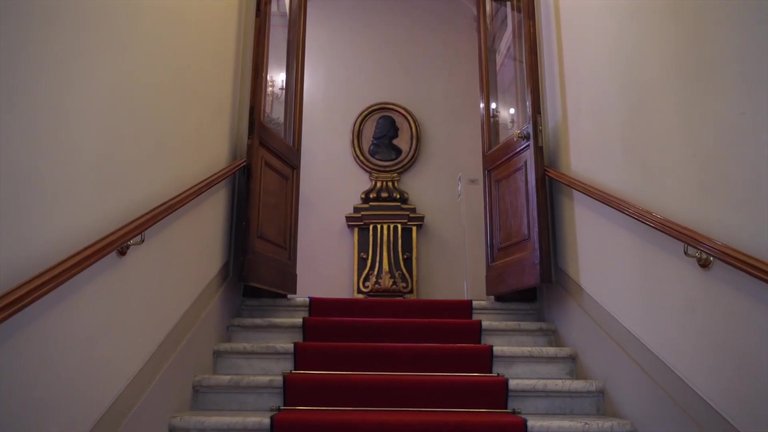
Every corner in the palace breathes history. A real cannonball that crashed through the window during a seige in the middle of the nineteenth century was left untouched on the staircase step where it landed. The family also took great pride in Pope Martin V, who came from their own ranks. So there is a special Papal Room in the palace reserved solely for the arrival of the Pope. The throne here faces the wall and would only be turned around when the Pope came to visit. 120 master pieces considered Italy national herritage are also housed within these walls. Works by Sandro Botticelli, Annibale Carracci famous painting The Bean Eater and the portrait of Michelangelo close friend Vittoria Colonna are just a part of this cool collection.



I hope I managed to transport you to that impressive atmosphere of Rome. If you ever find yourself over this way, you can tour the palace on Saturday mornings with a standard ticket for 15 Euros or experience this unique history for 25 Euros with a ticket option that includes the Princess Isabella Apartments.
You can check out this post and your own profile on the map. Be part of the Worldmappin Community and join our Discord Channel to get in touch with other travelers, ask questions or just be updated on our latest features.