Antonio Gades en la Habana(es/en)


VERSIÓN EN ESPAÑOL
¡Hola!
Saludos a todos en esta comunidad.
Cada vez que transito por el entorno de la plaza de la catedral en La Habana Vieja, me hago la misma interrogante: ¿por qué la escultura a tamaño natural del bailarín español Antonio Gades, modelada por el escultor cubano José Villa Soberón y fundida en bronce, no está ubicada en un lugar vinculado al baile o la danza en general?
Y estoy pensando en lugares bien emblemáticos de la ciudad en tal sentido, como por ejemplo, el Gran Teatro de La Habana Alicia Alonso (GTH).

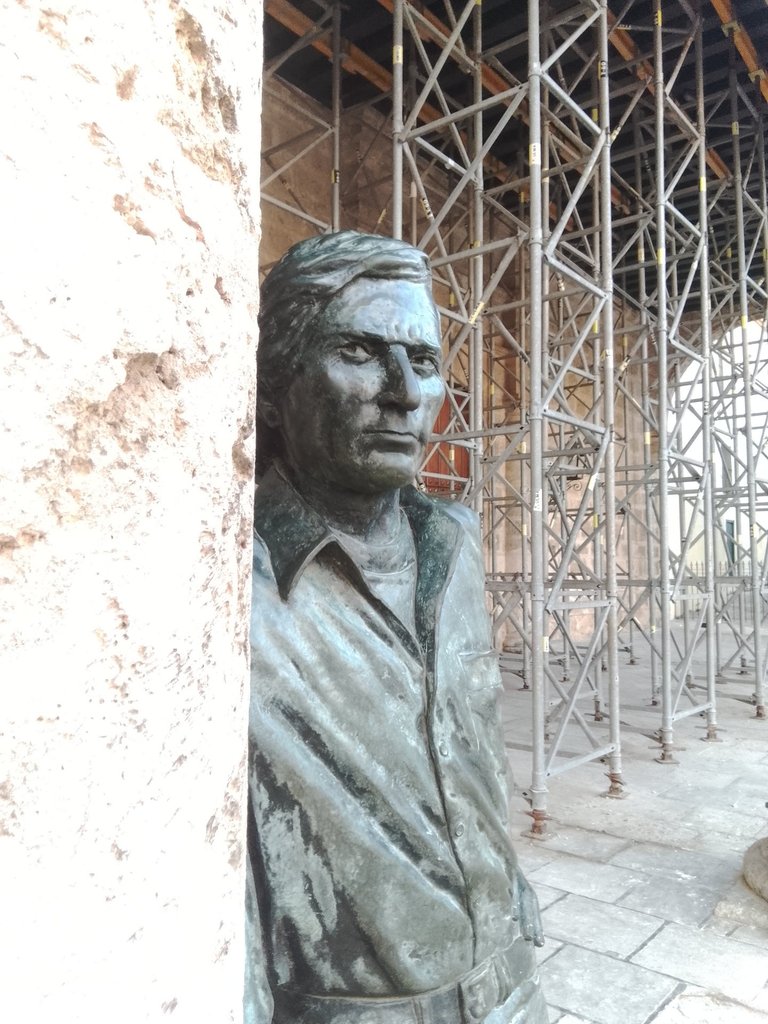
La escultura es bastante realista, ya que está patinada con colores naturales, como hacían los griegos en la antigüedad clásica. De veras, parece un turista más recostado a una columna en el portal del Palacio Lombillo, en uno de los cuadrantes de la plaza de la catedral habanera.
Antonio Gades, además de ser un excelso bailarín de la música flamenca, fue un gran amigo de Cuba y de su proceso revolucionario, al que visitaba periódicamente con diferentes propósitos. Como el enamorado que siempre encuentra un pretexto para volver al reencuentro con su amada, que siempre lo espera pacientemente desde la lejanía.

Hace años, cuando La Habana Vieja era un espacio densamente habitado por la masa itinerante de turistas, me hice un par de fotos junto a la estatua de este simbólico personaje de las tablas andaluzas. Fue prácticamente como una manera cubana de hacerme el turista, o para dejar solamente constancia de que estuve en ese lugar y no en otro.
Esta vez entré a la plaza por la parte del callejón del Chorro, y estaba totalmente desierta, vacía. Me dio la impresión de que era una fotografía de un tiempo congelado. Solo allá, recostado quietamente en una columna del Palacio Colonial del Conde de Lombillo, se veía la figura de bronce sin pulir del afamado bailarín, con su peculiar melena, su camisa metida por dentro del pantalón bien ceñido a la cintura y de patas acampanadas.
Me di a la tarea de observar una imagen fundida en bronce. Desde diferentes ángulos, descubrí que su mirada serena, pero escrutadora, pasa por encima del hombro del espectador como buscando algo en el ángulo de la plazoleta adoquinada donde se encuentran y se saludan la catedral y la calle Empedrado, muy cerca de la Bodeguita del Medio.

Creo que este ambiente quizás es el que más prefería Antonio para disfrutar mejor de la estructura colonial y la arquitectura que dejaron como legado y memoria los de la madre patria en la isla. Saturado por el bullicio de las grandes ciudades europeas y de los teatros y plazas artísticas abarrotadas para verle bailar excepcionalmente, un poco de soledad en una mañana o en una tarde habanera podría ser bien relajante.
Sin embargo, más allá del romanticismo que puede sugerirnos un ambiente como ese, el rostro de gases refleja unas marcadas líneas de preocupación o de haber tenido algún tipo de desavenencia con alguien. Labios apretados y ceño fruncido, algo no estuvo bien.
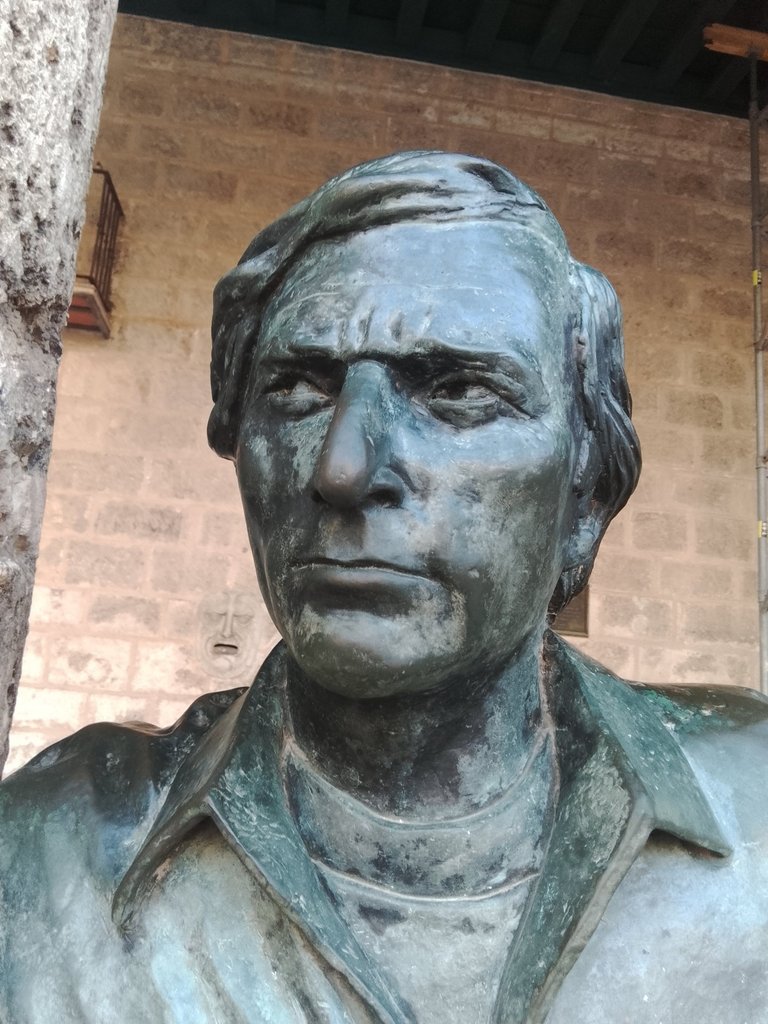
Contradicciones de la vida. Sobre el Gade de la plaza de la Catedral no se ha tejido ni to ni leyenda ni mito que haga que el público interactúe con él al Al Lenon del parque del Vedado no le dejan tranquilo los espejuelos, pero al bailarín español el bronce muestra la opacidad del bronce patinado por el paso del tiempo, la lluvia y el sereno.

Es bueno que las plazas y calles de esta y otras ciudades acojan esculturas como estas que immortalizan el espíritu de quienes trascendieron en su momento en alguna esfera de la vida, lo que hace vivir al transeúnte la historia y la cultura de los pueblos.
Gracias por acompañarme en la visita a este personaje y nos vemos en la próxima oportunidad.

Texto original de mi autoría.
Todos los derechos reservados.©
@davidsantafe que lo hace con la energía del Caballero de París, frente al convento de San Francisco de Asís, al que le han bruñido algunas partes al extremo de casi dañar la escultura.
Al Lenon del parque del Vedado no le dejan tranquilo los espejuelos, pero al bailarín español el bronce muestra la opacidad del bronce patinado por el paso del tiempo, la lluvia y el sereno.
Es bueno que las plazas y calles de esta y otras ciudades acojan esculturas como estas que immortalizan el espíritu de quienes trascendieron en su momento en alguna esfera de la vida, lo que hace vivir al transeúnte la historia y la cultura de los pueblos.
Gracias por acompañarme en la visita a este personaje y nos vemos en la próxima oportunidad.
Texto original de mi autoría.
Todos los derechos reservados.©
@davidsantafe

ENGLISH VERSIÓN
Hello!
Greetings to everyone in this community.
Every time I walk around the cathedral square in Old Havana, I ask myself the same question: why is the life-size sculpture of the Spanish dancer Antonio Gades, modeled by the Cuban sculptor José Villa Soberón and cast in bronze, not located in a place linked to dancing or dance in general?
And I am thinking of very emblematic places in the city in this sense, such as, for example, the Gran Teatro de La Habana Alicia Alonso (GTH).
The sculpture is quite realistic, since it is patinated with natural colors, as the Greeks did in classical antiquity. He really looks like just another tourist leaning against a column in the portal of the Lombillo Palace, in one of the quadrants of the Havana cathedral square.
Antonio Gades, in addition to being an excellent dancer of flamenco music, was a great friend of Cuba and its revolutionary process, which he visited periodically for different purposes. Like the lover who always finds an excuse to return to the reunion with his beloved, who always waits patiently for him from afar.
Years ago, when Old Havana was a space densely inhabited by the itinerant mass of tourists, I took a couple of photos next to the statue of this symbolic character from Andalusian scenes. It was practically like a Cuban way of pretending to be a tourist, or to only leave a record that I was in that place and not in another.
This time I entered the square through the Chorro alley, and it was completely deserted, empty. It seemed to me that it was a photograph of frozen time. Only there, leaning quietly on a column of the Colonial Palace of the Count of Lombillo, could be seen the unpolished bronze figure of the famous dancer, with his peculiar mane of hair, his shirt tucked into his pants tightly fitted at the waist and with flared legs.
I took on the task of observing an image cast in bronze. From different angles, I discovered that his serene but scrutinizing gaze passes over the viewer's shoulder as if searching for something in the corner of the cobbled square where the cathedral and Empedrado Street meet and greet each other, very close to the Bodeguita del Medio.
I think that this environment is perhaps the one that Antonio preferred the most to better enjoy the colonial structure and architecture left as a legacy and memory by those of the mother country on the island. Saturated by the hustle and bustle of the big European cities and the theaters and artistic squares packed to see him dance exceptionally, a little solitude on a Havana morning or afternoon could be very relaxing.
However, beyond the romanticism that an environment like that can suggest, the gaseous face reflects some marked lines of worry or having had some kind of disagreement with someone. Tight lips and frown, something was not right.
Contradictions of life. On the Gade in the Cathedral Square, neither legend nor myth has been woven that makes the public interact with it. Al Lenon in Vedado Park is not left alone by the glasses, but for the Spanish dancer, the bronze shows the opacity of the bronze patinated by the passage of time, the rain and the night.
I>t is good that the squares and streets of this and other cities host sculptures like these that immortalize the spirit of those who transcended in their time in some sphere of life, which makes the passer-by experience the history and culture of the people.
Thank you for accompanying me on the visit to this character and we will see you at the next opportunity.
Original text of my authorship.
All rights reserved.©
@davidsantafe who does it with the energy of the Knight of Paris, in front of the convent of San Francisco de Asís, which has had some parts burnished to the point of almost damaging the sculpture.
The Lenon in Vedado Park is not left alone by the glasses, but for the Spanish dancer the bronze shows the opacity of the bronze patinated by the passage of time, the rain and the night.
I>t is good that the squares and streets of this and other cities host sculptures like these that immortalize the spirit of those who transcended at the time in some sphere of life, which makes the passerby experience the history and culture of the people.
Thank you for accompanying me on the visit to this character and see you at the next opportunity.
Original text of my authorship.
All rights reserved.©
@davidsantafe
