Cavilando con León Tolstói (microensayo ficcional) (Esp – Eng)
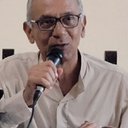
León Tolstoi, el novelista y cuentista ruso considerado uno de los más grandes escritores universales, murió hace 115 años, el 20 de noviembre de 1910. Su obra literaria quizás nos exceda, por la abundancia de sus páginas, pero seguramente hemos sido espectadores de algunas de las muchas versiones de sus principales novelas en filmes. Ha sido biografiado por grandes escritores como Stefan Zweig y Romain Rolland. Lo mío es solamente un escarceo.

Había decidido apartarse del mundo, que le parecía muy injusto y violento. Sí, de esa conciencia suya no cabía dudas. Era su alegato en esa epopeya moderna de la humanidad hecha novela: Guerra y Paz, la que le había costado cinco o más años de su vida escribirla. Llegó a pensar que estamos expuestos a la fatalidad, y la guerra era una de sus manifestaciones, producida por el poder. Por eso al final de su novela, en las reflexiones que la cierran, expresa: “El vínculo más fuerte, el más indestructible, el más grande y el más constante que nos ata a nuestros semejantes es lo que se llama el poder”.
Parecía que la única actitud frente a esa fatalidad del mal era la resistencia no violenta, aquella que Gandhi tomaría para sí. Había llegado a ser un convencido pacifista y un ácrata, pues sabía que el Estado era uno de esos males. No se debía ser un seguidor de su voluntad. Había sido censurado muchas veces por ese monstruo y la iglesia, hasta sus últimos momentos.
Sabía que estaba lleno de contradicciones e incoherencias, y por ello construyó aquellos personajes novelescos que comportaban gran parte de lo que él era. Después de Guerra y Paz y Ana Karénina, su última novela, Resurrección, fue su confesión de fe cristiana, lejos de todo convencionalismo eclesiástico, y la confirmación de su convicción por la justicia y los desamparados.
Referencia:
Tolstói, León (1959). Obras. España: Edit. Aguilar
English version
Reflecting on Leo Tolstoy (a fictional micro-essay)
Leo Tolstoy, the Russian novelist and short-story writer considered one of the greatest writers of all time, died 115 years ago, on November 20, 1910. His literary work may overwhelm us, given its sheer volume, but we have surely all witnessed some of the many adaptations of his major novels.
He has been the subject of biographies by great writers such as Stefan Zweig and Romain Rolland. My contribution is merely a brief foray.
...
He had decided to withdraw from the world, which seemed to him deeply unjust and violent. Yes, there was no doubt about his conviction. This was his argument in that modern epic of humanity made into a novel: War and Peace, which had taken him five or more years of his life to write. He came to believe that we are all subject to fate, and that war was one of its manifestations, a product of power. That is why, at the end of his novel, in the concluding reflections, he states: “The strongest, most indestructible, greatest, and most constant bond that ties us to our fellow human beings is what is called power.”
It seemed that the only response to this fatalistic evil was nonviolent resistance, the very resistance Gandhi would later adopt. He had become a committed pacifist and an anarchist, for he knew that the State was one of those evils. One should not be a follower of its will. He had been censured many times by that monster and the Church, right up until his final moments.
He knew he was full of contradictions and inconsistencies, and for this reason, he created those fictional characters who embodied much of who he was. After War and Peace* and Anna Karenina, his last novel, Resurrection was his confession of Christian faith, far from all ecclesiastical convention, and the confirmation of his conviction for justice and the helpless.






Esta publicación ha recibido el voto de Literatos, la comunidad de literatura en español en Hive y ha sido compartido en el blog de nuestra cuenta.
¿Quieres contribuir a engrandecer este proyecto? ¡Haz clic aquí y entérate cómo!