Arnaldo Acosta Bello: Adiós al rey
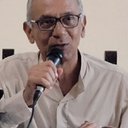
Han transcurrido 30 años de la muerte del querido poeta venezolano Arnaldo Acosta Bello, ocurrida el 6 de abril de 1996 en Barquisimeto (Edo. Lara), a quien tuve el honor de conocer en Cumaná, mi ciudad, donde vivió algunos años ejerciendo una labor cultural de gran importancia en la Universidad de Oriente; a esa ciudad volvía de vez en cuando. La última vez fue en su visita a la Casa Ramos Sucre en los años 80.

Foto: Vasco Szinetar - Fuente
Desde que leí su poesía, debo reconocer que su canto melancólico y, a la vez, entusiasta quedó en mi corazón. Acerca de él y su poesía escribí un post hace tres años, el cual pueden leer en el siguiente enlace.
Han sido varios los homenajes (artículos, crónicas, selecciones poéticas, etc.) rendidos a Arnaldo Acosta Bello a raíz de su muerte. Hoy, revisando el libro del cual publicaré dos breves poemas suyos, encontré un recorte de El Nacional, donde el maestro artista Pedro León Zapata le hizo su propio tributo en su columna “Zapatazos”. Se los reproduzco en una foto que hice de ese recorte.

Decidí esta vez escoger dos poemas de su último libro, publicado por Monte Ávila Editores, en noviembre de 1995, unos cinco meses antes de su muerte: Adiós al rey. Haré un comentario sobre ellos al final.
Debo vivir
En este cuarto solo, sin ninguna
voz distinta a la mía,
veo el ángel cargando a la luna
un rojo licor embriaga a los grillos
un aserrín oscuro sale de sus patas.
La mustia yerba que el verano ha dejado
recibe el aire tostado de la madrugada,
no quiere pudrirse. Como una mujer
se acuesta, se abre, aferra los cabellos,
besa y muerde los labios, los hombros
de una sed ardiente.
No es la garganta seca frente al lirio
lleno de agua, es la sangre que ahoga en su pantano
la pequeña vida de mis ojos, y debo vivir.
(Para Rowena Hill y Nancy Busch)
Nada
Cierta melancolía, cierto humor
revueltos en la taza del café.
Esta mañana tiene sin embargo
flores. El potro salvaje encierra
el relincho en su propia nariz.
La piel se estira cuando la lluvia
o las moscas llegan con sus patas frías.
Dentro de mí no pasa nada.
Considero que estos dos pequeños poemas del poeta Acosta Bello condensan el ánima de su poesía, quizás de su vida. Apreciamos en “Debo vivir” ese talante melancólico que la recorre en gran medida. Es la conciencia de la soledad frente a la imagen y al acontecer pequeño del mundo. La sensación de lo vital haciéndose metáfora en lo elemental, que también es deseo corporal, quizás ya ausente. El reconocimiento de “una sed ardiente” que pide seguir viviendo, casi como una resignación.
No otro sentimiento encontramos en “Nada”. En este tal vez sea más evidente. A partir de la vivencia concreta, se despliega el contraste, pues la melancolía se reconforta en las flores. Para mí la imagen más sorprendente y elocuente es la contenida en los veros 4 y 5: pareciera leer en ellos esa contención que ha llevado al dominio o la moderación necesaria para la despedida. Las dos imágenes siguientes son indudablemente melancólicas. ¿Alguien que se preparaba para la muerte? Y su verso final, no casualmente separado de la estrofa anterior, se nos impone como la verdad inobjetable de la vida solitaria.
Para terminar, leo en su poema del mismo libro, esta frase poética que conmueve: “Un pequeño error puede aproximarnos a Dios / más que una deslumbrante verdad”.
Referencias:
Acosta Bello, Arnaldo (1995). Adiós al rey. Caracas: Monte Ávila Editores.
En este enlace, otros poemas de Arnaldo Acosta Bello: https://vomiteunconejito.wordpress.com/2020/04/11/poemas-de-arnaldo-acosta-bello/
Un hermoso texto en homenaje a Arnaldo Acosta Bello: https://www.aporrea.org/cultura/a267997.html





Esta publicación ha recibido el voto de Literatos, la comunidad de literatura en español en Hive y ha sido compartido en el blog de nuestra cuenta.
¿Quieres contribuir a engrandecer este proyecto? ¡Haz clic aquí y entérate cómo!
Has sido votado por
PROYECTO ENLACE
'Conectando Ideas y Comunidades'
PROYECTO ENLACE es un proyecto de curación de habla hispana enfocado en recompensar contenido de calidad y apoyar autores en su proceso de crecimiento en HIVE.
Creemos y apostamos por el futuro de esta gran plataforma, y estamos muy emocionados de poder hacerla crecer junto a esta comunidad. Así que te invitamos a publicar en nuestra COMUNIDAD y estar atento a todas las actividades que tenemos preparadas y que estaremos publicando en breve.
¿QUIERES AUTOMATIZAR TUS GANANCIAS DE CURACIÓN? SE PARTE DEL PROYECTO ENLACE APOYANDO A NUESTRO TRAIL EN HIVE.VOTE INGRESA AQUÍ PARA CONOCER LOS DETALLES.
¿QUIERES INVERTIR ENLACE? DESCUBRE COMO HACERLO Y GENERAR INGRESOS DE FORMA SEMANAL MEDIANTE TU DELEGACIÓN DE HP AQUÍ TE EXPLICAMOS COMO.
Te invitamos a participar en nuestro servidor de Discord: https://discord.gg/3S9y7BbWfS
Atentamente
EQUIPO ENLACE 2026
Gracias, amigos de @enlace. Saludos.
I wanted to read the whole story here but my Spanish is zero. I used a tool to do a word-by-word flip of the entire post so I could understand the history of this poet properly. It is much faster than everyone copy-pasting lines into a translator one by one. The literal meaning of the poems and the author's analysis is actually very deep. Dropping the full English version below to save everyone else the manual labor.
Full Literal Translation (Ai Assisted):
30 years have passed since the death of the dear Venezuelan poet Arnaldo Acosta Bello, occurred on April 6, 1996 in Barquisimeto (Edo. Lara), whom I had the honor of knowing in Cumaná, my city, where he lived some years exercising a cultural labor of great importance in the University of the East; to that city he returned from time to time. The last time was in his visit to the Casa Ramos Sucre in the 80s.
Since I read his poetry, I must recognize that his song melancholic and, at the same time, enthusiastic stayed in my heart. About him and his poetry I wrote a post three years ago, which you can read in the following link.
Have been several the homages (articles, chronicles, poetic selections, etc.) rendered to Arnaldo Acosta Bello as a result of his death. Today, reviewing the book from which I will publish two brief poems of his, I found a clipping from El Nacional, where the master artist Pedro León Zapata made him his own tribute in his column “Zapatazos”. I reproduce them to you in a photo I made of that clipping.
I decided this time to choose two poems from his last book, published by Monte Ávila Editores, in November of 1995, some five months before his death: Goodbye to the King. I will make a comment about them at the end.
I must live
In this room alone, without any
voice different to mine,
I see the angel carrying to the moon
a red liquor intoxicates to the crickets
a sawdust dark comes out of their legs.
The withered grass that the summer has left
receives the air toasted of the early morning,
does not want to rot. Like a woman
she lies down, she opens, she clutches the hair,
kisses and bites the lips, the shoulders
of a thirst burning.
It is not the throat dry in front of the lily
full of water, it is the blood that drowns in its swamp
the small life of my eyes, and I must live.
(For Rowena Hill and Nancy Busch)
Nothing
Certain melancholy, certain humor
stirred in the cup of the coffee.
This morning has however
flowers. The colt wild encloses
the neigh in its own nose.
The skin stretches when the rain
or the flies arrive with their feet cold.
Inside of me nothing happens.
I consider that these two small poems of the poet Acosta Bello condense the soul of his poetry, perhaps of his life. We appreciate in “I must live” that spirit melancholic that runs through it in great measure. It is the consciousness of the solitude in front of the image and the happening small of the world. The sensation of the vital making itself metaphor in the elemental, which also is desire corporal, perhaps already absent. The recognition of “a thirst burning” that asks to continue living, almost like a resignation.
No other feeling we find in “Nothing”. In this one perhaps it is more evident. From the experience concrete, is deployed the contrast, because the melancholy is comforted in the flowers. For me the image most surprising and eloquent is the contained in the verses 4 and 5: it seems to read in them that containment that has led to the domain or the moderation necessary for the farewell. The two images following are undoubtedly melancholic. Someone who prepared himself for death? And its verse final, not casually separated from the stanza previous, imposes itself on us as the truth unquestionable of the life solitary.
To finish, I read in his poem of the same book, this phrase poetic that moves: “A small error can approach us to God / more than a dazzling truth”.
I really appreciate your effort in translating my post into English so that English speakers can read it. Best regards, @maxpayn.
@commentrewarder
El "yo poético" menciona a la soledad; y se detiene a mirar todo lo que lo rodea; y ese todo adquiere significados profundos:
Los últimos versos, sobre todo el "Debo vivir" me suena a frase optimista; a deseo de seguir viviendo acá, a pesar de todo.
El poema "NADA" es sublime. En él se presentan contrastes: "una melancolía y cierto humor revueltos en la taza de café". Pero, a pesar de eso, en el campo crecen las flores. Lo cual nos hace pensar que no todo es malo.
¿Y qué de él? ¿Del "yo lírico?"
Bueno, él dice no sentir nada. Pero yo creo que siente todo.
Me encantó leerte. Por cierto, la caricatura de Zapata es genuina. Comparto con él la idea de que:
Un abrazo.
Gracias por tu atenta lectura, que me parece muy atinada, aunque la poesía no se sujete a una sola interpretación. Saludos, querida @solperez01.
@commentrewarder
Así es. La poesía consigue en cada lector una interpretación y un sentir diferentes.
Update: @josemalavem, I paid out 0.165 HIVE and 0.000 HBD to reward 2 comments in this discussion thread.