"MI" Main Icon | Macro Photography Session - Technical Description


Hi everyone :)
I present another photographic record that is very ritualistically associated with the famous Caminho de Santiago.
The main focus will always be on the visual record, which is the main objective of these sessions; however, since today's piece is the scallop shell, also known as a shell, which is the most representative piece of this beautiful walk.
Those who know, understand what I'm writing about, and have certainly seen this symbol almost everywhere along the way, on backpacks, on the doors of inns and hotels, embedded in the ground, and even in sculptures and ornaments.
This shell, according to one story, would serve as proof at the end of the spiritual journey, after the pilgrims walked to Finiterra, considered the end of the world.
There are many more stories associated with the shell, which today is the main icon of this journey.
Session Purpose
The goal of these macro photography sessions is to capture images with as much detail as possible within the capabilities of the technique used, always focusing on the meticulous observation and documentation of all visual characteristics and details. Furthermore, I aim to create attractive visual compositions for publication on this blog, seeking to share the beauty and complexity of this work.
Let me present today’s model:



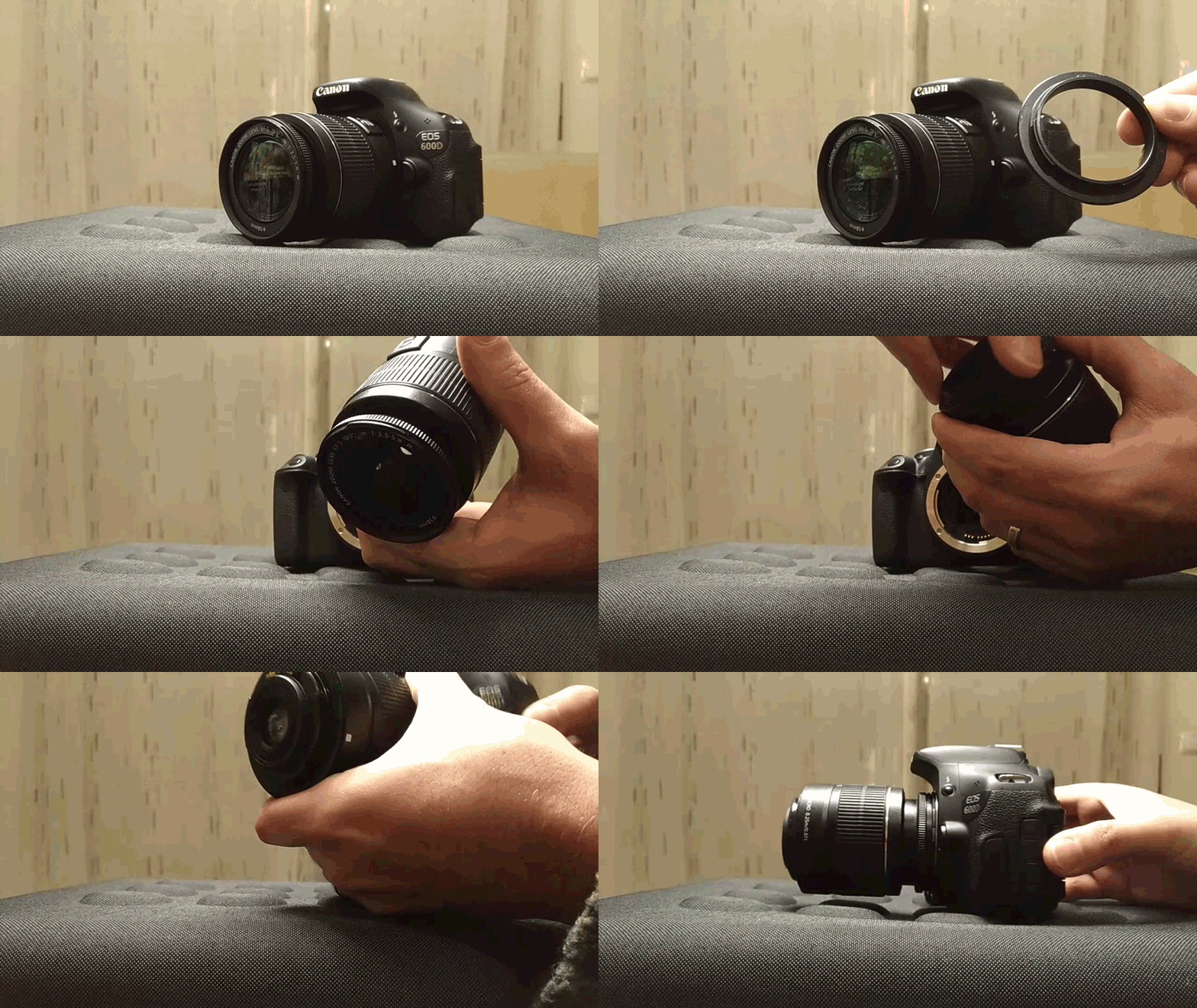
Among the numerous techniques available for macro photography, this method is arguably the most cost-effective and efficient for individuals possessing a camera with a removable lens. By simply detaching the lens and reversing its direction, and employing an inversion ring, the process becomes more manageable and streamlined.
Used equipments
Camera: Canon EOS 600D Digital SLR with CMOS sensor
Lens: EFS 18-55mm with f/5 maximum aperture, allowing shallow depth of field and capturing fine details.
Used inverter ring
Tripod: not used
Lighting: Adjustable LED lights to provide soft, even lighting, avoiding harsh shadows and highlighting the details of structures.
Camera Settings
Focus Mode: Manual focus to ensure precision in specific details of the structure.
Aperture: Variable aperture between f/4 and f/5 for adequate depth of field, ensuring all important details are in focus.
ISO: Low ISO setting (400) to minimize noise in images.
Shutter Speed: Adjust shutter speed as needed to avoid underexposure, while maintaining a value that allows you to capture sharp details.
To finish, i leave you with some considerations regarding these photo sessions:
Observing all these pieces through macro photography reveals a fascinating dimension and breadth, full of minute details that ultimately assume significant importance in the visual composition. The complexity of these objects, when viewed from this perspective, takes on a beauty that is often overlooked by the indifference of the eye. The essence of macro photography lies in its ability to elevate ordinary objects to extraordinary levels, offering an intimate and captivating perspective.
The session is closed for today.
Hope you like it :)
These photos weren't taken with a tripod
Camera - Canon EOS 600D
Lens - EFS 18-55mm
Location - Portugal

See you soon
Thank you for watching
Never forget
The price of anything is the amount of life you trade for it.
Time is life... value yours, make every fraction worth it.